


Views: 0 Author: Site Editor Publish Time: 2026-06-18 Origin: Site


The transition from traditional optical endoscopes to advanced electronic systems has fundamentally shifted upper gastrointestinal diagnostics. This massive technological leap directly impacts lesion detection rates. It also boosts daily procedural throughput in busy clinics. Procuring an electronic gastroscope requires a delicate balancing act. You must weigh upfront capital expenditure against proven clinical efficacy. Furthermore, facilities need to accommodate strict infection control protocols. They must also manage long-term maintenance requirements. Making an uninformed choice can compromise diagnostic accuracy and burden operational budgets. We designed this guide to help you navigate these complex decisions. We provide facility directors, procurement officers, and lead gastroenterologists with a clear path. You will discover a vendor-neutral, evidence-based framework for evaluating modern endoscopy equipment. You will learn how to shortlist systems based on actual clinical merit, system compatibility, and technical reliability.
Clinical Efficacy: High-definition image sensors (CMOS/CCD) combined with optical enhancement technologies significantly improve the detection of early mucosal changes.
System Compatibility: Assessing backward and forward compatibility with existing video processors prevents forced ecosystem lock-in.
Total Cost of Ownership (TCO): Long-term costs are dictated heavily by repair frequency, service contract terms, and reprocessing consumable requirements.
Compliance & Risk: Modern scopes must align with updated payer documentation standards and stringent infection control guidelines to ensure steady reimbursement and minimize liability.
Modern endoscopy relies entirely on sensor quality. You should compare High-Definition (HD) CCD sensors against the latest-generation CMOS sensors. CMOS technology often provides superior artifact reduction. It also excels in low-light performance. You must evaluate frame rates closely. High frame rates prevent motion blur during active navigation. We also recommend checking the field of view. A visual angle of 140° or wider allows rapid, accurate screening. This wide angle ensures you do not miss hidden lesions behind mucosal folds.
Feature | HD CCD Sensors | Modern CMOS Sensors |
|---|---|---|
Image Processing | Processed at the processor unit | Processed directly at the scope tip |
Noise Reduction | Standard artifact control | Superior noise reduction in low light |
Power Consumption | Generally higher | Lower, generating less heat |
Frame Rate Stability | Excellent for standard imaging | Exceptional for rapid movement |
Advanced lighting modes have replaced traditional dye spraying in many scenarios. Assess integrated optical enhancement technologies carefully. You will encounter narrow-band imaging, blue-light imaging, or linked-color imaging. These modes help you distinguish intricate vascular patterns easily. They prove essential when evaluating Barrett’s esophagus. They also help identify early gastric neoplasia. By toggling these lighting modes, endoscopists can secure targeted biopsies with higher diagnostic yields.
Determine the necessity of Dual Focus or Near Focus capabilities for your practice. These features allow detailed examination of suspicious upper digestive tract lesions. They magnify the mucosal surface seamlessly. You can achieve this without manual dye spraying. Near focus modes bring the camera lens within millimeters of the tissue. This yields microscopic clarity. It ultimately supports real-time clinical decisions regarding tissue resection.
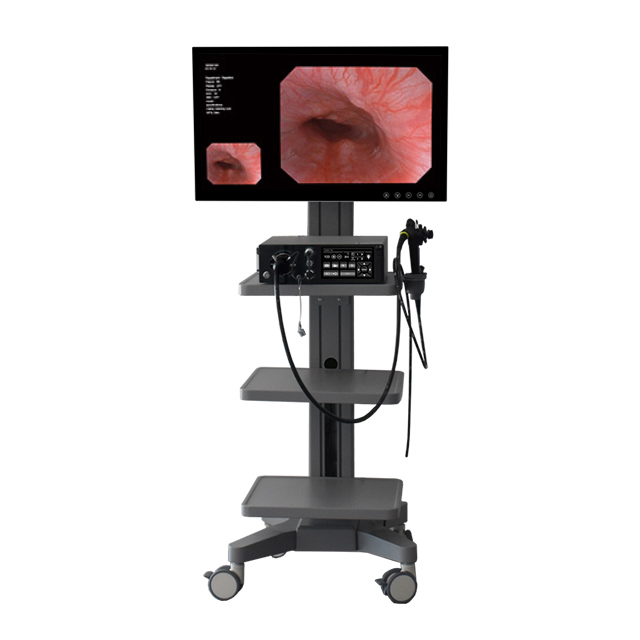
You must choose between standard diagnostic models and ultra-slim transnasal options. Outer diameters typically range from 5mm to 9.8mm. You should base this decision on your specific patient population. Consider your facility's standard sedation protocols as well. Unsedated transnasal procedures require ultra-slim models. Standard sedated exams allow thicker tubes. Evaluate the flexibility of the electronic gastroenteroscope carefully. A well-designed insertion tube minimizes patient discomfort. It also reduces torque resistance during intubation.
Ultra-slim scopes (5.0mm - 6.0mm): Ideal for pediatric cases, strictures, and unsedated transnasal endoscopy.
Standard scopes (8.5mm - 9.0mm): Best for routine screening and basic biopsies.
Therapeutic scopes (9.8mm+): Built for advanced interventions requiring large instruments.
Analyze the instrument channel width carefully. This usually spans from 2.0mm to 3.2mm. A larger channel easily supports advanced therapeutic interventions. It accommodates tools for Endoscopic Mucosal Resection (EMR) and Endoscopic Submucosal Dissection (ESD). It also provides stronger suction capabilities. However, a larger channel increases the overall tube diameter. You must balance the need for robust suction against patient comfort constraints.
Review the 4-way angulation specifications thoroughly. You need reliable Up/Down and Right/Left movement. Standard scopes offer 210° upward angulation. This ensures safe navigation of the gastric fundus. It also helps you reach the duodenal bulb easily. Mechanical responsiveness degrades over time. Therefore, you should test the tension of the control wheels. Smooth angulation directly prevents procedural delays.
Evaluate weight distribution and button layout. An ergonomic grip mitigates repetitive strain injuries. Endoscopists handle these devices for hours during high-volume screening days. Poorly balanced control bodies cause severe hand fatigue. You should ensure suction and insufflation valves sit within easy reach. Customizable remote buttons also streamline image capture and lighting mode adjustments.
Verify compatibility with existing endoscopic video towers. Forward and backward compatibility protects your investment. It prevents forced ecosystem lock-in. Ensure seamless data transmission to your EMR and PACS networks. This integration guarantees compliant, automated procedure reporting. When a new electronic gastroscope connects effortlessly to older processors, you save substantial capital.
Evaluate waterproof designs carefully. Fully submersible scopes offer distinct advantages over those requiring water-resistant caps. Caps easily fail, causing catastrophic fluid invasion. Assess the internal channel architecture next. It must allow easy brushing. It should also pair perfectly with standard Automated Endoscope Reprocessors (AERs). Finally, review manufacturer guidelines on high-level disinfection (HLD) chemical compatibility.
Leak Testing: Ensure the scope supports automated dry leak testing to detect early seal failures.
Brushing Architecture: Verify that channel junctions lack sharp angles where bioburden could hide.
Chemical Resistance: Confirm the bending rubber resists premature degradation from harsh peracetic acid or glutaraldehyde.
AER Compatibility: Cross-reference the scope model with your current AER wash basin connections.
Analyze historical data on the lifespan of specific parts. The bending section, control knobs, and light guide cables endure heavy stress. They frequently wear out under standard clinical loads. Ask vendors for expected cycle limits before major overhauls become necessary. Robust adhesive seals and durable bending rubbers prevent unexpected downtime. Tracking these failure rates helps you forecast annual repair budgets accurately.
Compare Original Equipment Manufacturer (OEM) service plans against certified Independent Service Organization (ISO) options. OEM contracts guarantee genuine parts but often command higher premiums. ISO repairs might save money upfront. However, you must ensure they follow strict quality protocols. Always require guaranteed response times. You should also demand access to loaner equipment. This provision actively prevents clinical downtime while your primary scope undergoes repair.
Ensure the device carries current FDA clearance or appropriate CE marking. Never bypass regulatory validation. Confirm the system’s imaging and reporting capabilities meet major payer requirements. Documentation standards required by groups like Carelon or Anthem evolve constantly. High-resolution image captures justify medical necessity claims for upper GI procedures. Flawless reporting integration ensures steady reimbursement streams.
Map your existing video towers, AER units, and EMR software first. This audit helps you isolate truly compatible scope models. It prevents you from purchasing equipment that requires hidden network upgrades. You must document specific firmware versions on your current video processors. This ensures flawless communication with newly purchased scopes.
Segment purchasing options based on your core daily workflows. A screening-heavy practice prioritizes lightweight ergonomics and wide fields of view. Conversely, a practice focused on advanced therapeutic interventions demands larger working channels and water-jet capabilities. By defining this primary use case, you eliminate unnecessary features that inflate the purchase price.
Mandate a multi-day clinical trial before signing any purchase order. Spec sheets cannot replicate real-world feel. Evaluate ergonomics, image clarity, and mucosal contrast during actual procedures. Let your highest-volume endoscopists perform the trials. Their feedback regarding control body weight and button placement proves invaluable. They will quickly identify any workflow friction.
Leverage multi-scope acquisitions to negotiate better terms. Volume purchasing gives you significant leverage. Ask for extended warranties on high-wear components. You can also negotiate discounted preventative maintenance schedules. Fleet upgrades unify your equipment pool. This standardization drastically reduces reprocessing errors among your nursing staff. It also simplifies spare part inventory management.
Selecting the optimal equipment requires looking far beyond top-line imaging specs. You must evaluate workflow integration, reprocessing demands, and lifecycle maintenance rigorously. We recommend focusing on the following action-oriented next steps to secure the right asset for your facility:
Prioritize cross-compatibility with your existing video processors to leverage prior infrastructure investments.
Demand an extended clinical trial period to validate ergonomics and mucosal contrast in real patient scenarios.
Standardize your fleet where possible to reduce reprocessing errors and streamline technician training.
Negotiate robust loaner agreements to eliminate schedule disruptions during inevitable repair cycles.
By framing the decision around clinical diagnostic yield and operational longevity, facilities secure equipment that elevates patient care. You protect operational margins while empowering your gastroenterology team with reliable, precision tools.
A: A premium scope typically operates reliably for three to five years under heavy daily use. This translates to roughly 3,000 to 5,000 procedures. Achieving this lifespan requires rigorous adherence to handling and reprocessing protocols. Bending rubbers and insertion tubes will naturally degrade and require scheduled component overhauls during this period.
A: CMOS sensors allow for digital image processing directly at the scope tip. This drastically reduces visual noise and heat generation. However, high-end HD CCD sensors still offer comparable clinical yields. The definitive advantage often depends entirely on the accompanying video processor platform your facility currently uses.
A: Larger channels allow for broader therapeutic accessory use, increasing billable procedures. However, they require stricter, sometimes costlier, reprocessing verification. The increased surface area elevates bioburden risk. You will likely spend more on specialized cleaning brushes, enzymatic detergents, and automated washing cycles over the device's lifespan.
A: Yes, using non-OEM parts typically voids existing manufacturer warranties. It also introduces compliance and operational risks. If a third-party facility uses unvalidated adhesives, it might compromise the FDA or CE infection control validation. Always verify that any independent service organization carries proper ISO certifications before trusting them with repairs.


