| Availability: | |
|---|---|
| Quantity: | |
product view
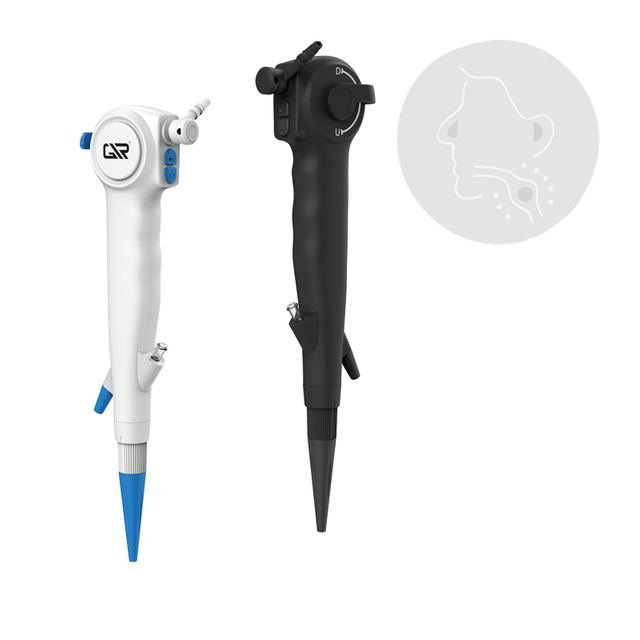
Multiple diameter options (Φ2.8 / Φ4.0 / Φ5.0 / Φ5.8) are available with flexible bending capability and wide field of view. Compatible with various surgical accessories, it supports both diagnostic screening and interventional treatment in pulmonology departments.
Bronchoscope Parameter
Φ2.8
Maximum Outer Diameter of Insertion Tube: ≤Φ3.0mm
Minimum Inner Diameter of Instrument Channel: >@1.2mm
Working length:480-600mm
Field of view: >120 °(direct view)
Observation depth: ≥2-150mm
Resolution: ≥520,000 pixels
Bending angle: ≥ 210° upward (D) > 120
Φ4.0
Maximum Outer Diameter of Insertion Tube:≤Φ4.2mm
Minimum Inner Diameter of Instrument Channel: 202.0mm
Working length:480-600mm
Field of view: ≥120 °(direct view)
Observation depth:≥2-150mm
Resolution: ≥520,000 pixels
Bending angle: ≥ 210 °upward (D) ≥120°
Φ5.0
Maximum Outer Diameter of Insertion Tube: <Φ5.2mm
Minimum Inner Diameter of Instrument Channel: 202.8mm
Working length:480-600mm
Field of view: ≥120 °(direct view)
Observation depth: ≥2-150mm
Resolution:≥520,000 pixels
Bending angle: ≥ 210° upward (D) ≥ 120°
Φ5.8
Maximum Outer Diameter of Insertion Tube: ≤Φ6.0m
Minimum Inner Diameter of Instrument Channel: >@3.0mn
Working length:480-600mm
Field of view: >120 (direct view)
Observation depth: 22-150mm
Resolution: >520,000 pixels
Bending angle: ≥ 210 upward (D) > 120
·Ergonomic lightweight handle relieves operator fatigue during long-time airway endoscopic operations.
• Smooth tapered distal tip enables gentle, atraumatic navigation through delicate respiratory tracts.
• Built-in ≥520,000-pixel image sensor delivers clear, stable real-time endoscopic images.
• Wide 120° field of view with an observation depth of 2–150 mm for comprehensive airway inspection.
• Flexible deflection performance: upward bending ≥210°, downward bending ≥120°, covering complex bronchial branches.
• Multiple specifications available (Φ2.8, Φ4.0, Φ5.0, Φ5.8) with different working channel sizes to match various accessories.
• Matched high-luminosity cold light source eliminates risk of thermal injury to airway tissues.
• Supports diagnostic examination, biopsy, suction and interventional therapy in respiratory endoscopy.
Unexplained hemoptysis or blood in sputum: The electronic bronchoscope can directly observe the situation in the trachea and bronchus, identify the bleeding site, and find the cause of bleeding, such as inflammation, tumor, bronchiectasis, etc. At the same time, biopsy or brush examination can be performed to obtain pathological specimens to clarify the nature of the lesion.
Diagnosis of infectious diseases: For patients suspected of bronchial and pulmonary infection, electronic bronchoscopy can perform bronchoalveolar lavage, obtain alveolar lavage fluid for microbial culture and smear examination, which is helpful to identify pathogens and guide the rational use of antibiotics in clinic.
Diagnosis of diffuse lung diseases: such as interstitial pneumonia, alveolar proteinosis and other diffuse lung diseases, electronic bronchoscopy can obtain lung tissue and cell samples through bronchoalveolar lavage, transbronchial lung biopsy and other methods, for pathological examination and related laboratory tests, which is helpful to identify the type and cause of the disease.
Therapeutic aspect
Airway foreign body removal: it is an important means to treat airway foreign bodies, especially for children or adults aspiration of foreign bodies. The electronic bronchoscope can use foreign body forceps, net basket and other instruments to remove the foreign body under direct vision to avoid long-term retention of foreign bodies leading to airway obstruction, infection and other serious complications.
Hemoptysis treatment: When the patient has massive hemoptysis, the electronic bronchoscope can quickly find the bleeding site, and hemostatic treatment can be carried out by local injection of hemostatic drugs, electrocoagulation, balloon pressure and other methods, effectively control the condition and save the patient's life.
Treatment of pulmonary infection: For some serious pulmonary infections, especially patients with thick sputum and poor drainage, electronic bronchoscopy can be performed by bronchoalveolar lavage to clear sputum, secretions and inflammatory mediators in the airway. At the same time, local antibiotics can be injected to improve the effect of anti-infection treatment.