


loading


loading
| Availability: | |
|---|---|
| Quantity: | |
GEIWRE


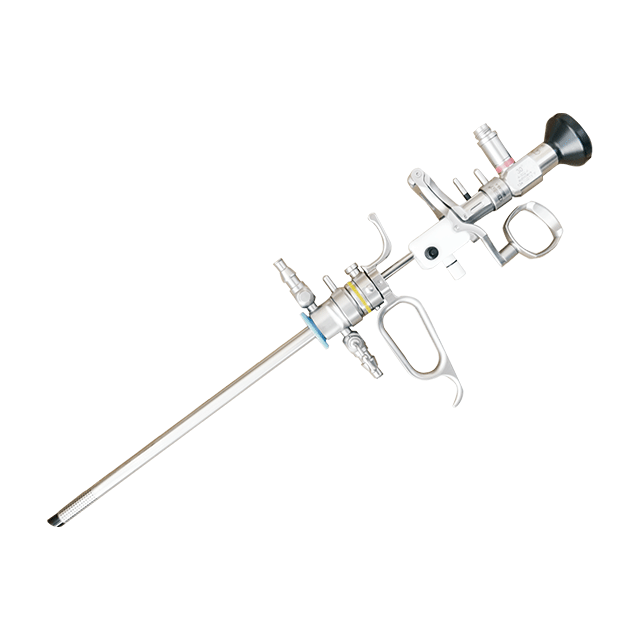
The Double-Action Bipolar Resectoscope is an advanced minimally invasive surgical instrument designed to deliver precise tissue resection and reliable hemostasis for urological and gynecological procedures. Utilizing an authentic bipolar system, the electrical current loop operates independently of the resectoscope sheath. This design eliminates the need for a patient return electrode pad, fundamentally mitigating the risks associated with external current conduction. By leveraging specialized bipolar energy technology, the device ensures optimal cutting efficiency combined with controlled current output, providing a safer and more effective solution for modern surgical environments.
Unlike traditional monopolar devices that require a return electrode pad (which introduces potential burn risks), this bipolar resectoscope integrates both active and return electrodes within the working element. This creates a true bipolar configuration where the electrical current remains confined strictly to the internal components, bypassing the sheath entirely. When activated, energy flows exclusively between these closely positioned electrodes, focusing the current on a targeted tissue area of typically 1 to 2 millimeters. This localized energy delivery enables low-temperature resection and highly concentrated current application. As a result, surgeons can achieve three critical effects simultaneously: precise removal of pathological tissues, rapid coagulation of small blood vessels to manage bleeding, and minimal thermal spread to adjacent healthy structures such as nerves, muscles, and mucous membranes. Furthermore, this technology supports resection in normal saline, enhancing overall procedural safety.
Recognized as a foundational tool in minimally invasive surgery, this device is engineered for diverse clinical applications, including but not limited to:
Urological Surgery: Highly effective for Transurethral Resection of the Prostate (TURP) to treat benign prostatic hyperplasia (BPH), transurethral resection of bladder tumors (TURBT), and the management of urethral strictures or bladder stones.
Gynecological Surgery: Suitable for the resection of uterine fibroids, endometrial ablation addressing abnormal uterine bleeding, and the precise treatment of cervical lesions or vaginal cysts.
Specialized Procedures: Supports minimally invasive tissue resection in selected cases involving pelvic floor dysfunction and specific genital tract malformations.
The standard system configuration includes a high-frequency bipolar generator, an ergonomic resectoscope sheath (available in multiple diameters to suit patient anatomy), specialized working elements (such as loop or rollerball electrodes), an irrigation/aspiration system, and an integrated imaging module compatible with high-definition endoscopes. Its primary clinical and operational advantages include:
Enhanced Surgical Safety: By eliminating "grounding errors" and unintended thermal injury, this device can reduce operative complications—such as tissue necrosis, bleeding, and infection—by up to 40% compared to conventional monopolar alternatives, based on clinical data from leading urological centers. Crucially, it allows for resection using normal saline, which significantly lowers the risk of Transurethral Resection (TUR) syndrome. Its minimal tissue penetrability also reduces obturator nerve stimulation and minimizes tissue carbonization.
Superior Precision & Operational Efficiency: The highly localized energy field allows surgeons to dissect delicate tissues with submillimeter accuracy. This precision helps preserve critical anatomical structures, such as erectile nerves during prostate surgery, supporting better post-operative outcomes while maintaining optimal cutting efficiency.
Optimized Surgical Workflow: Rapid hemostasis capabilities contribute to reducing overall operative time by an average of 20% to 30%. Concurrently, the integrated irrigation and aspiration system maintains a clear visual field by continuously removing smoke and tissue debris during the procedure.
Patient-Centric Benefits: Minimized tissue trauma directly translates to accelerated recovery. Patients typically experience shorter hospital stays (often reduced to 1 to 2 days compared to 3 to 5 days for traditional methods), less post-operative pain, faster restoration of urinary continence, and lower readmission rates.
Versatility & Compatibility: The system is designed to integrate with various established endoscope brands and supports both reusable and single-use components, accommodating diverse hospital infection control protocols and specific surgical preferences.
The Double-Action Bipolar Resectoscope is manufactured in strict adherence to international quality and safety standards, holding CE (European Conformity), FDA (U.S. Food and Drug Administration), and ISO 13485 Medical Device Quality Management System certifications. Every unit undergoes rigorous evaluation, from material biocompatibility testing to ensure patient safety and avoid allergic reactions, to electrical stability assessments, guaranteeing reliable performance in high-volume clinical settings.
By uniting precision, safety, and efficiency, the Bipolar Resectoscope empowers healthcare facilities to deliver superior minimally invasive care while mitigating the economic burden associated with long-term patient management. It serves as a comprehensive clinical solution that aligns with the global shift toward less invasive and more effective surgical interventions, ultimately enhancing both procedural outcomes and patient satisfaction.
The physical structure of the Double-Action Bipolar Resectoscope Safe Saline Cutting Tool is engineered with a highly integrated architecture, designed to ensure precise mechanical control, reliable optical transmission, and consistent instrument compatibility. The system's construction is divided into several meticulously assembled core components, each fulfilling a specific functional requirement to support efficient and accurate operation.
Endoscope body: Serving as the core visual component of the device, the endoscope body integrates a high-precision objective lens system, an advanced optical transmission and image transfer system, and durable light fibers. This structural composition is specifically engineered to acquire and transmit high-resolution images with minimal distortion, ensuring optimal illumination and visual clarity. By delivering a clear, real-time view of the internal anatomical structures, it allows operators to accurately observe the targeted area, which is essential for precise navigation and safe execution of the procedure.
Working channel: Designed as the primary conduit for procedural execution, the working channel accommodates the smooth insertion and withdrawal of various auxiliary therapeutic instruments. This includes, but is not limited to, lithotriptic instruments, lithotomy forceps, and biopsy forceps. The internal structure of the channel is optimized to reduce mechanical friction, allowing for the unobstructed passage of these tools without compromising the integrity of the instruments or the endoscope body. This structural design ensures that operators can efficiently perform necessary therapeutic operations and biopsy procedures during the intervention.
Operating lever: Acting as the critical mechanical linkage between the main endoscope body and the proximal handle, the operating lever is dedicated to the precise control and articulation of the device. It translates the operator's hand movements into accurate, responsive adjustments of the mirror body's angle and direction. Built for structural stability and responsive mechanical feedback, this lever enables smooth navigation through complex anatomical pathways. This precise directional control is vital for achieving the optimal viewing angle and accurately positioning the working end for targeted treatment.
Handle: Functioning as the primary user interface, the handle is ergonomically structured to provide a secure, balanced, and comfortable grip for the operator. It is meticulously designed to minimize hand fatigue during prolonged procedures, ensuring consistent control and stability. The handle integrates a logical layout of various function buttons and control mechanisms, placing essential operational features within easy reach. This structural composition allows the user to intuitively manage the device's mechanical and functional capabilities, facilitating efficient and continuous execution of complex tasks throughout the procedure.
The cohesive integration of these primary structural components ensures that the device maintains mechanical integrity and operational reliability. By focusing on durable construction and precise structural alignment, the physical composition of this tool supports consistent performance, meeting the rigorous physical demands of professional medical environments and providing procurement teams with a dependable equipment solution.
1. What is an autoclavable rigid ureteroscope?
An autoclavable rigid ureteroscope is a high-precision medical instrument designed for diagnosing and treating urinary tract conditions. Its primary distinction is the ability to withstand high-temperature sterilization in an autoclave, making it a fully reusable and highly cost-effective solution for medical facilities.
2. Is this ureteroscope reusable?
Yes. Constructed from premium medical-grade stainless steel and durable optical components, this rigid ureteroscope is designed for complete reusability. It is engineered to endure multiple sterilization cycles, providing consistent reliability for daily clinical use and reducing the need for frequent replacements.
3. How should the ureteroscope be sterilized?
The device is fully compatible with standard autoclave sterilization. We highly recommend steam sterilization at 121°C–134°C for 15–30 minutes. Always refer to the specific manufacturer guidelines to ensure optimal sterilization parameters and to protect the longevity of the equipment.
4. Can it be disinfected with chemical sterilants?
While autoclaving remains the preferred and most reliable method, specific chemical sterilants (such as ethylene oxide or hydrogen peroxide plasma) may be utilized if an autoclave is unavailable. Please verify compatibility with the manufacturer's recommendations prior to applying alternative sterilization methods to prevent material degradation or optical damage.
5. How many sterilization cycles can it endure?
When handled, cleaned, and maintained according to standard hospital protocols, the ureteroscope is designed to withstand hundreds of sterilization cycles. Regular pre-use inspections are recommended to monitor for natural wear and ensure continued clinical performance.
6. How should the ureteroscope be stored after sterilization?
After sterilization, the instrument must be stored in a clean, dry, and dust-free environment. It is highly recommended to keep it sealed in a sterile pouch or a dedicated sterilization container to maintain its sterile integrity and protect it from physical impacts until the next procedure.
7. What are the key advantages of an autoclavable rigid ureteroscope?
8. How do I check for damage or wear?
Before each clinical use, a thorough visual and functional inspection should be conducted, including:
9. Can the ureteroscope be repaired if damaged?
Yes. Professional repair and refurbishment services are widely available for rigid ureteroscopes. We advise contacting your supplier or an authorized medical equipment service center for proper evaluation and servicing to safely restore the instrument to optimal working condition.
10. Where can I purchase replacement parts?
Standard replacement components, including light cables, sealing caps, and adapters, can be sourced directly through the original manufacturer or authorized regional distributors to ensure exact compatibility and reliable performance.
11. Is training required to use this ureteroscope?
Yes. Comprehensive training in instrument handling, proper sterilization protocols, and clinical operation is strictly required. Proper training ensures patient safety, maximizes procedural efficiency, and protects the delicate optical equipment from premature wear or accidental damage during reprocessing.
12. What is the typical warranty period?
The standard warranty period typically covers 1–2 years against defects in materials or manufacturing workmanship. Please note that this warranty generally does not cover damage resulting from improper handling, inadequate maintenance, physical drops, or failure to follow the specified sterilization guidelines.


