


Views: 0 Author: Site Editor Publish Time: 2026-01-04 Origin: Site


Hidden stones or strictures can fool scans. Do you need direct duct vision to confirm what imaging suggests? A Flexible Choledochoscope lets clinicians look inside the biliary tree, especially the common bile duct, so they can confirm findings, guide treatment, and document true duct clearance. In this article, you will learn when it helps most, what features matter, and how to run a safe, efficient clinical workflow.
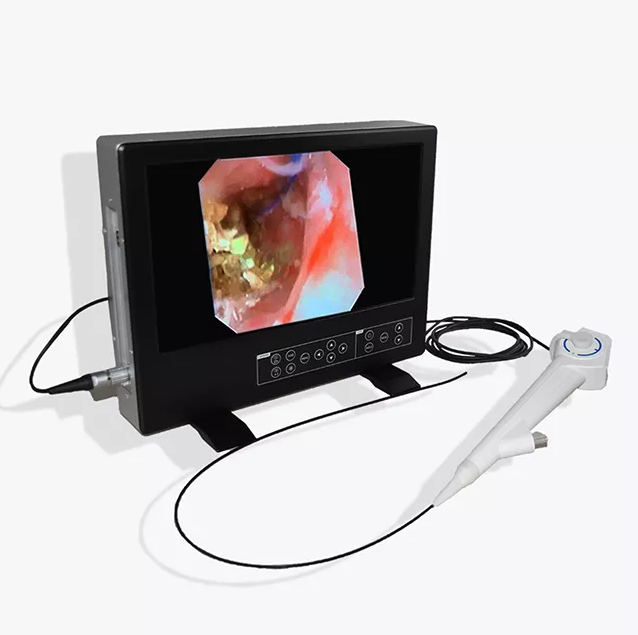
A Flexible Choledochoscope is a flexible scope designed for choledochoscopy or cholangioscopy. It gives direct visualization inside bile ducts. Many models include a steerable distal tip, internal channels, and a camera system. Some units are integrated as a video choledochoscope endoscope system. Others connect to a processor and monitor.
In simple terms, it is a “see inside the bile duct” tool. It can be used for diagnosis, therapy, and confirmation. That combination is the main reason it is valuable. When direct view is available, decisions rely less on inference and more on visible findings.
In many facilities, the term also covers the full setup. This includes the scope, imaging chain, accessories, and reprocessing pathway. Teams should consider how these parts work together, not only the scope body.
The scope supports three common goals. First, it helps find bile duct stones and confirm removal. Second, it helps assess strictures and suspicious duct lesions. Third, it supports targeted sampling under direct vision. These goals reduce uncertainty and can reduce repeat procedures.
It also supports intraoperative bile-duct exploration. That matters when teams want clearance before surgical closure. It can reduce the risk of retained stones and delayed complications.
Recorded images can also improve alignment across teams. Surgeons and endoscopists can review the same findings and plan follow-up more clearly. That reduces handoff ambiguity and improves continuity of care.
Bile ducts are narrow, angled, and branching. Flexibility helps navigation through those turns. A steerable tip supports controlled entry into branches. It also helps maintain orientation during tool work.
Flexibility also improves safety. It can reduce force against duct walls. It can lower the risk of mucosal injury during difficult passes. It also supports smoother tool exchange when the tip is stabilized.
Accuracy improves because the operator can inspect, re-check, and target. Instead of assuming a filling defect is a stone, they can visually confirm it. Instead of sampling “near a stricture,” they can sample the most suspicious area. In many workflows, that improves confidence and reduces delays.
Flexible choledochoscopy adds the most value in “hard cases.” These include difficult bile duct stones, recurrent stones, and complex anatomy. It also helps in unclear strictures, where imaging is not decisive. It can support targeted biopsy when brushings or standard sampling are inconclusive. It also helps when teams need proof of duct clearance.
It is not always the first-line tool. Many stones clear with standard methods. The scope becomes critical when teams need direct confirmation, targeted therapy, or confidence before closure. It also becomes valuable when prior interventions have failed, because it can show why progress stalled.
These high-value use cases are often predictable. They cluster in complex surgery services and high-volume endoscopy settings. This helps teams plan training, scheduling, and backup options.
| Clinical situation | What the scope helps confirm | Typical added value |
|---|---|---|
| Suspected bile-duct stones | Stone presence, size, location | Fewer retained stones |
| Difficult or recurrent stones | Residual fragments after extraction | Better clearance confidence |
| Indeterminate obstruction | Visible cause vs imaging guess | Faster decision making |
| Suspected stricture | Length, surface, severity | More accurate assessment |
| Suspicious lesion | Target area for sampling | Higher sampling precision |
| Complex anatomy | Branch access and orientation | Safer navigation |
Teams select access routes based on setting, timing, and anatomy. Intraoperative exploration occurs during surgery. It may fit laparoscopic or open pathways. Peroral cholangioscopy occurs via endoscopy workflows, often during ERCP sessions. Percutaneous access may use an established tract, such as a T-tube tract in selected scenarios.
Route selection changes staffing and equipment needs. It also changes the urgency for scope availability. A reusable scope may fit scheduled cases well. A single use choledochoscope may fit urgent cases or limited reprocessing capacity.
When choosing a route, teams often consider:
How quickly they can escalate to another approach
Which team owns the case (OR vs endoscopy)
How much room time is available
How many times the patient can safely return
A route choice can also affect documentation needs. OR workflows may focus on clearance proof before closure. Endoscopy workflows may focus on stricture characterization and biopsy documentation.
| Access route | Common setting | Strengths | Key limits |
|---|---|---|---|
| Intraoperative exploration (lap/open) | OR during surgery | Immediate clearance check | Needs surgical access |
| Peroral cholangioscopy (via ERCP pathways) | Endoscopy unit | Fits endoscopy workflow | Depends on endoscopic access |
| Percutaneous / T-tube tract | Selected follow-up cases | Uses existing tract | Not always available |
Therapy depends on channel size and accessory support. Common maneuvers include stone retrieval support, evaluation of strictures, and targeted biopsy or brushing. In selected cases, cholangioscopy can guide lithotripsy for difficult stones. It can also help confirm that fragments are cleared.
Therapy should follow the clinical plan. It is easy to “keep trying tools” without progress. Teams should define a stop point and escalation route. That approach protects patient safety and procedure time.
Therapy capability should be assessed in realistic scenarios. A scope may have a channel on paper, yet accessories may bind in tight turns. It is worth testing tool passage under typical deflection angles, not only in a straight setup.
| Feature area | What to look for | Why it matters in the duct |
|---|---|---|
| Optics & illumination | Clarity, contrast, stable image | Improves diagnostic confidence |
| Steering & deflection | Range, precision, smooth control | Improves branch reach and safety |
| Working channel | Size, accessory compatibility | Enables therapy, not just viewing |
| Irrigation behavior | Flow stability, pressure control | Keeps view clear, lowers risk |
| Durability | Leak resistance, robust bending section | Reduces downtime and failures |
| Recording & output | Video capture, integration | Supports documentation and review |
In bile ducts, lighting matters more than you expect. Strong illumination improves contrast. Better contrast supports lesion detection and accurate biopsy targeting. Image stability matters too, because movement can blur details and reduce confidence.
Many facilities now require reliable recording. Clear images improve training and audit readiness. This increases the importance of camera and processor performance. It also raises practical questions about storage, privacy, and access policies.
When evaluating optics, teams often look at:
Clarity at close range
Visibility in turbid bile
Performance under heavy irrigation
Color consistency during prolonged cases
Deflection range determines whether you can enter branches. Precision determines whether you can work safely near strictures. Steering should feel smooth and predictable. Unstable steering increases duct wall contact and operator fatigue.
The bending section is also linked to durability. Aggressive twisting can damage internal components. A training program should include proper steering technique and limits. This matters in units with frequent staff rotation.
“Reach” should be defined as reach with a tool in the channel. Some scopes steer well empty, but steering performance changes during therapy. A realistic check includes tool insertion and active irrigation.
The working channel is the “do work” component. It limits which tools can pass and how well they move. A larger channel improves tool options, yet it may increase scope diameter. That can reduce access in narrow ducts. Teams should match channel size to their real case mix.
Irrigation performance is also essential. Low flow leads to poor visibility and longer case time. Uncontrolled flow can raise pressure. Pressure control protects safety and supports stable viewing.
Many programs treat irrigation as a “visibility budget.” If visibility fails, time expands. That affects throughput and staff workload. For this reason, irrigation management is often a key training topic, not a minor detail.
Durability depends on materials, handling, and reprocessing. Common failures include channel damage, leaks, and image degradation. Transport and storage practices affect these risks. Trays, caps, and protected bends reduce damage.
Service support also affects downtime. A strong repair process can protect scheduling reliability. Single-use options reduce repair downtime, yet they shift costs into per-case spend. The right choice depends on local volume, staffing stability, and safety priorities.
Rigid scopes can provide stable control in selected open cases. They may fit short, straight access routes. They can be easier to stabilize during certain maneuvers. However, rigid scopes struggle in angled or branching ducts.
Flexible scopes offer better reach and branch access. They fit minimally invasive workflows and complex anatomy. They also support controlled steering in narrow segments. In many programs, flexibility expands case coverage and reduces conversion rates in difficult anatomy (needs verification).
In practical terms, the difference is often workflow fit:
Rigid: stable, limited reach, narrower case set
Flexible: broad reach, more training, more reprocessing focus
Peroral systems integrate into endoscopy suites and ERCP workflows. They can evaluate strictures and guide therapy during endoscopic sessions. Dedicated surgical choledochoscopy aligns well with intraoperative exploration goals. It can confirm clearance before closure and reduce post-op surprises.
Selection should match how your facility runs cases. Consider staffing patterns, room availability, and escalation pathways. The best tool is the one that fits your operating model. A strong device that does not fit your scheduling reality becomes underused.
A common mistake is comparing devices without comparing pathways. Pathways drive real cost, risk, and utilization.
Reusable scopes lower marginal cost at high volume. They require strong reprocessing capacity and consistent training. They also require repair planning and backup inventory. Single-use can reduce cross-patient contamination risk, because there is no reprocessing step between patients. It can also reduce downtime, because there is no repair queue.
Single-use can be a strong fit in urgent settings, remote sites, or low-infrastructure centers. Reusable can be a strong fit in high-volume centers with mature reprocessing teams. Many facilities also adopt a hybrid model to balance cost and reliability.
| Decision factor | Reusable flexible choledochoscope | Single use choledochoscope |
|---|---|---|
| Infection control | Depends on reprocessing quality | Lower cross-patient risk potential |
| Turnaround time | Limited by reprocessing capacity | Ready per case |
| Downtime risk | Repairs can disrupt schedules | Minimal repair downtime |
| Cost profile | Lower at high volume | Predictable per-case spend |
| Training focus | Heavy on reprocessing and care | Heavy on workflow and inventory |
| Best-fit sites | High volume centers | Remote sites, urgent care paths |
Endoscopes are complex devices with internal channels. Soil can remain if cleaning is incomplete. Moisture can support microbial growth during storage. These risks drive strict cleaning, drying, and storage practices.
Safety risk also includes duct injury risk. Excess force, poor visibility, or uncontrolled irrigation can harm tissue. Teams must treat safety as a system, not a checklist. That system includes training, supervision, audits, and incident response.
A safe flow starts at point of use. Remove gross soil quickly. Flush channels before debris dries. Use closed transport to protect staff and surfaces. Perform leak testing as required. Then perform manual cleaning, brushing, and flushing. Follow the device IFU for disinfection or sterilization steps. Finish with thorough drying and safe storage.
Do not treat automated steps as a full solution. Manual cleaning is still critical for many scopes. Drying is also critical. Storage should protect from recontamination and physical damage. If storage conditions are poor, the entire reprocessing effort can be undermined.
Many programs also define “time-to-clean.” If that window is missed, the scope may need an enhanced cleaning step. This is a governance decision that improves reliability.
Quality checks make reprocessing reliable. Track cycle logs and staff training. Audit brush selection and detergent use. Check drying practices and cabinet conditions. Use incident review when contamination is suspected.
Programs should define KPIs. Examples include turnaround time, repair frequency, leak test failures, and process compliance rates. These metrics improve reliability and support quality improvement.
Some programs also run periodic process verification. This can include sampling plans, tracer testing, or targeted audits. The right method depends on local policy and resources.
Use the lowest irrigation pressure that preserves vision. Avoid repeated blind tool passes. Use direct vision for contact work. Stop when progress stalls. Escalate to another method or another team when needed. Monitor patients for post-procedure infection signs and document events clearly.
Safety habits should be standardized. They should not depend on “who is on shift.” Standardization reduces variability and improves outcomes.
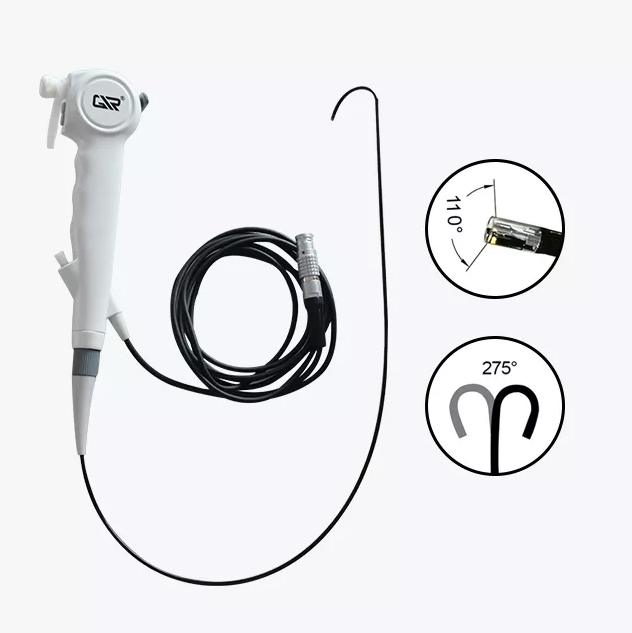
Start with your case mix. If you handle many stones, prioritize channel performance and tool compatibility. If you handle many strictures, prioritize image quality and biopsy control. Confirm insertion diameter, length, and deflection range. Confirm that your top accessories fit and move smoothly.
Also consider how often you need mobility. If you move between rooms, evaluate a portable medical endoscope setup. Portability can reduce delays and improve utilization. It can also support shared resources across departments.
It helps to separate “must-have” specs from “nice-to-have” specs. Must-have specs align with your most common cases. Nice-to-have specs support rare cases or future expansion.
Decide how you capture images and video. Decide who owns storage and access. Confirm file formats and transfer workflows. If you operate across OR and endoscopy units, standardize as much as possible. Standardization reduces training time and support complexity.
A video choledochoscope endoscope solution can support consistent records. It can also support training libraries and QA review. This also impacts IT integration and cybersecurity policies.
Common documentation questions include:
Where will videos be stored?
How long will they be retained?
Who can access them and for what purpose?
How will they be linked to the patient record?
Accessories are part of the system. Confirm baskets, balloons, and biopsy tools. Confirm lead times and vendor support. Standardize kits for common cases. Keep backup kits for urgent add-ons.
Inventory reliability is a hidden driver of downtime. Poor accessory supply can waste high-cost room time. It also increases error risk during rushed substitutions.
A strong support model should include:
Clear compatibility lists
Stable supply agreements
Training for accessory use
Fast replacement pathways for urgent cases
TCO includes the scope, the processor, repairs, and downtime. It also includes reprocessing labor, chemicals, space, and audits. Add training hours and backup inventory. Compare reusable and single-use based on program cost, not per-unit price.
Use scenario planning. Model high volume, low volume, and surge cases. Include “downtime days” and “reprocessing capacity limits.” Mark assumptions as “needs verification” when data is not local.
| Category | What to verify | Why it matters |
|---|---|---|
| Clinical fit | Stones versus strictures workload | Drives workflow and tools |
| Reach | Length and deflection range | Predicts branch access |
| Intervention | Channel size and tool fit | Enables therapy, not just viewing |
| Imaging | Light, resolution, recording | Supports confident decisions |
| Workflow | Setup time, portability | Impacts throughput |
| Safety | IFU clarity, drying requirements | Reduces infection risk |
| Support | Repair time, loaners, training | Protects scheduling reliability |
| Economics | TCO inputs, volume assumptions | Prevents hidden costs |
A Flexible Choledochoscope gives direct bile-duct vision and supports targeted therapy when imaging is uncertain. It also helps teams confirm duct clearance and document findings clearly. To use it well, match scope specifications to your case mix, keep the clinical workflow consistent, and treat reprocessing as a core safety practice to reduce infection risk. When planning equipment, compare reusable and single use choledochoscope options based on total program needs.
HENGJIA provides flexible choledochoscopes with dependable imaging, smooth steering, and practical support, helping teams improve efficiency and safety.
A: A Flexible Choledochoscope visualizes bile ducts; a video choledochoscope endoscope can record findings.
A: A Flexible Choledochoscope is advanced with irrigation and tools via its channel for diagnosis and therapy.
A: A Flexible Choledochoscope steers through narrow ducts; it improves reach and safety.
A: A single use choledochoscope may cut downtime; reusable needs strong reprocessing.
A: Volume, repairs, and reprocessing drive costs; a portable medical endoscope setup may add system spend.
A: Increase irrigation, pause, and re-center; a Flexible Choledochoscope needs a clear view for safe work.


