


Views: 0 Author: Site Editor Publish Time: 2026-07-10 Origin: Site


Upgrading or expanding surgical visualization equipment requires strict balance. You must weigh high-fidelity clinical outcomes against strict procurement budgets. Sterilization workflows also demand careful attention from hospital administrators. Modern operating rooms rely heavily on crystal-clear internal imaging. While the fundamental optics of a rigid endoscope remain consistent, modern advancements complicate the purchasing process. New shifts in system compatibility emerge constantly. Material durability and digital integration present new challenges for buyers. Older equipment evaluation methods often fall short today.
This guide provides a robust clinical and operational framework. You will learn to evaluate scopes effectively across departments. We help you vet suppliers without falling for superficial marketing claims. You can confidently align your upcoming purchases with daily clinical realities. By following these steps, you will secure reliable equipment. Your surgical teams will gain better visualization, and your processing departments will face fewer delays.
System Compatibility is Paramount: A high-quality rigid endoscope must integrate seamlessly with your existing light sources and camera control units to avoid unnecessary full-stack upgrades.
Durability Dictates ROI: The true cost of a scope is measured by its autoclavability and resistance to reprocessing degradation, not just its initial purchase price.
Service Level Agreements (SLAs) Matter: Supplier vetting must heavily weigh loaner programs and repair turnaround times to prevent surgical downtime.
Cross-Functional Vetting is Required: Final procurement decisions should align surgeon preferences (ergonomics, field of view) with central sterile processing capabilities (reprocessing compliance).
Every successful equipment rollout begins with a clear internal audit. You cannot buy the right tools without mapping your specific clinical needs. Hospitals often skip this step and purchase mismatched inventory. We recommend establishing firm baseline metrics before calling any vendors. This process aligns clinical users with supply chain managers.
You must map the specific surgical disciplines operating in your facility. Different specialties demand entirely different equipment profiles. Look at your case volumes over the past year. High-volume specialties require larger inventories to accommodate sterilization turnaround times. Consider these specific departmental needs:
Laparoscopy: Surgeons typically need 10mm scopes for standard abdominal procedures. They demand wide fields of view.
Arthroscopy: Orthopedic teams use smaller 4mm scopes. These scopes face high physical stress during joint manipulation.
Urology: Procedures require specific flow characteristics. Scopes here endure aggressive chemical environments during fluid management.
Identify which departments generate the highest equipment turnover. Allocate your budget toward these high-stress areas first.
Determine if you are replacing end-of-life scopes or building a net-new suite. Upgrading a single component necessitates a comprehensive audit of your current hardware. You must map your current video processors, surgical monitors, and light cables. Buying a cutting-edge 4K scope provides no benefit if your monitors only display 1080p resolution.
Check the coupling mechanisms on your existing camera heads. Standard couplers generally adapt well, but proprietary locks sometimes cause issues. Document the exact brand and model of your light sources. This documentation prevents costly compatibility errors down the line.
Define what a successful deployment looks like for your team. Vague goals lead to poor purchasing decisions. Establish concrete, measurable targets for the new equipment. Common operational benchmarks include:
Reducing unexpected repair rates by 15% over twelve months.
Standardizing cross-departmental inventory to reduce ordering confusion.
Achieving complete backward compatibility with legacy video systems.
Decreasing instrument turnaround time in the sterilization department.
Clear benchmarks give you leverage during vendor negotiations. They also provide an objective way to measure the new equipment's performance after installation.
Navigating technical specification sheets requires a sharp eye. Manufacturers often highlight impressive numbers. However, not all specifications translate to better clinical outcomes. You must match the physical optical capabilities to your real-world procedural needs. Let us break down the most critical engineering elements.
The core function of any scope is delivering a flawless image. You must evaluate the field of view (FOV), direction of view (DOV), and depth of field (DOF). Standard directions of view include 0°, 30°, and 45° angles. Surgeons select these based on anatomical access requirements.
Avoid over-specifying your optical needs. Match the optical clarity directly to your monitor's output capabilities. High-definition (HD) scopes work perfectly for most standard monitors. If your facility uses advanced 4K surgical displays, you must procure specialized 4K-rated optics. Using mismatched resolutions degrades the final image.
Optical Parameter | Clinical Importance | Best Practice Consideration |
|---|---|---|
Direction of View (DOV) | Determines the anatomical viewing angle during surgery. | Stock 0° for direct views; 30°/45° for complex cavity navigation. |
Field of View (FOV) | Dictates how much anatomy is visible at once. | Wider FOVs reduce scope movement but may distort edges slightly. |
Depth of Field (DOF) | Keeps objects in focus at varying distances. | Crucial for deep abdominal or pelvic procedures. |
A bright image requires excellent light transmission. Assess the quality of the fiber optic light pillars inside the scope. We recommend looking for scopes featuring sapphire glass cones. Sapphire glass resists scratching better than standard optical glass. It also withstands extreme sterilization temperatures effortlessly.
Inspect the construction of the light post joints. Look for laser-welded joints rather than glued assemblies. Laser welding maximizes light transmission perfectly. It also minimizes dangerous thermal damage at the surgical site. Poor quality light pillars lose transmission efficiency quickly, resulting in dim surgical fields.
Evaluate how the scope interfaces with your primary camera head. A modern rigid endoscope system must lock securely without light leaks. If your facility utilizes mixed-use operating rooms, versatility becomes crucial. You might perform laparoscopy and flexible airway procedures in the same room.
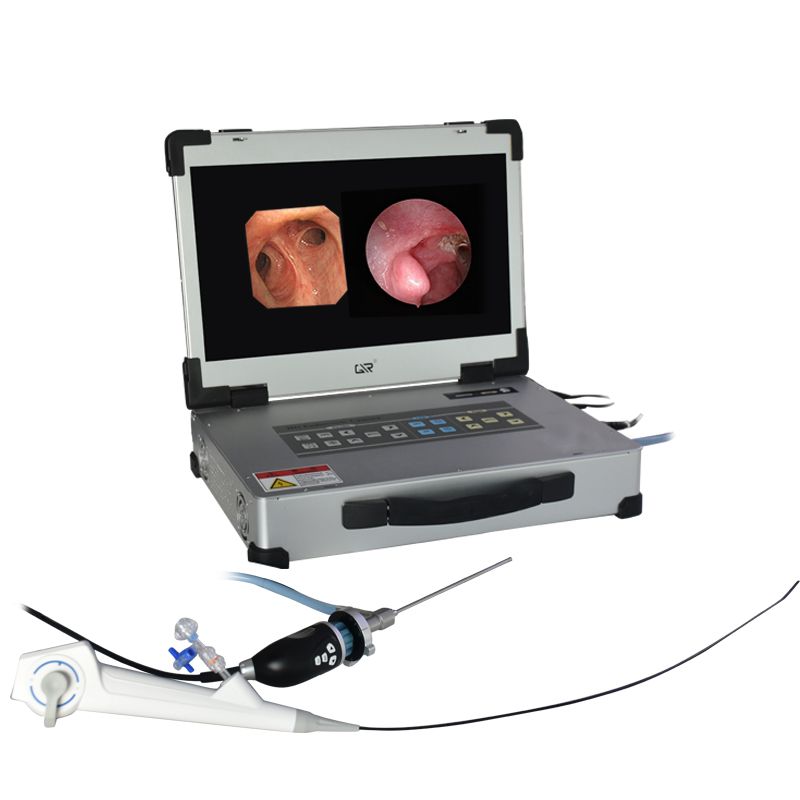
Consider the distinct advantages of a universal video processor. Modern universal systems support both standard rigid optics and a sophisticated rigid flexible endoscope camera. This dual compatibility reduces the need for multiple discrete equipment towers. It saves floor space and simplifies staff training significantly.
Surgeons hold these instruments for hours during complex cases. Ensure the design minimizes surgeon fatigue effectively. The scope should feel balanced in the hand. This balance is particularly important when attached to heavy camera heads or thick light cables.
Test the scope with your heaviest camera setup. Ask your surgical staff to simulate a prolonged procedure. Heavy, poorly balanced systems cause wrist strain. They can also lead to subtle image shaking during delicate tissue dissection. Ergonomics directly impacts the safety of the patient.
Sterilization departments act as the true testing ground for surgical equipment. Scopes experience intense heat, harsh chemicals, and rapid pressure changes daily. You must verify that your chosen equipment survives this hostile environment. Poor durability leads directly to surgical delays and frustrated staff.
Verify the specific autoclave cycle tolerances before signing any contract. Premium scopes easily handle standard pre-vacuum steam cycles. They typically endure 134°C (273°F) for 18 minutes without issue. Request documentation proving these tolerances.
Look for scopes constructed exclusively with medical-grade stainless steel. Examine the seams along the shaft closely. You want laser-welded seams rather than epoxy adhesives. Chemical adhesives degrade rapidly under heat and pressure. When adhesives fail, moisture breaches the internal optical channel, ruining the instrument instantly.
You must consult your CSSD leaders during the procurement process. Ensure the manufacturer’s Instructions for Use (IFU) align strictly with your hospital's existing protocols. Different facilities use different modalities, such as STERRAD, Steris V-PRO, or traditional steam sterilization.
If a scope requires a sterilization method your hospital lacks, do not buy it. Introducing a unique reprocessing workflow for a single instrument causes massive confusion. It increases the risk of staff compliance errors. Your CSSD workflow must remain standardized and predictable.
We see several common failure points in real-world implementations. You must anticipate these risks proactively. Recognizing these vulnerabilities helps you write better maintenance protocols.
Objective Lens Scratching: Caused by tossing scopes into crowded instrument trays. This blurs the surgical image permanently.
Internal Moisture Intrusion: Known as "fogging." This happens when seals crack during rapid cooling. It renders the scope completely useless.
Fiber Optic Breakage: Caused by bending the shaft or crushing the light post. This results in dark spots on the surgical monitor.
Coupler Degradation: Repeated chemical exposure eats away at camera locking mechanisms.
Demand hard data from vendors. Ask them for the average number of sterilization cycles their equipment survives before degradation occurs. Transparent suppliers provide this testing data willingly.
Buying medical equipment means entering a long-term relationship with a supplier. You are purchasing their customer service infrastructure alongside their hardware. A great scope from an unresponsive vendor quickly becomes a liability. Use strict logic to shortlist your potential partners.
Confirm the vendor holds all necessary regulatory clearances. In the United States, look for FDA 510(k) clearance. For European markets, verify the CE marking. You should also demand proof of ISO 13485 certification. This ISO standard guarantees they follow strict medical device quality management systems.
The supplier must provide clear traceability documentation. If a recall occurs, you need immediate serial number tracking. Do not partner with grey-market resellers who obscure device origins. Direct traceability protects your patients and your hospital's legal standing.
Interrogate the Service Level Agreement (SLA) fiercely. A standard one-year warranty often proves insufficient for high-volume hospitals. You need concrete answers to specific operational questions. Ask them directly:
Do you offer a guaranteed 24-hour loaner program?
Are repairs handled in-house by the Original Equipment Manufacturer (OEM)?
Do you outsource repairs to third-party facilities?
What is the guaranteed turnaround time for a rod-lens replacement?
If a vendor cannot guarantee fast loaners, your surgical schedule will suffer. Delays in repair turnarounds force hospitals to cancel elective surgeries.
Never buy equipment based solely on a brochure. Outline strict steps for an in-house trial. Demand a physical demo unit for at least two weeks. This trial period allows your teams to test the equipment under real conditions.
Provide the equipment directly to CSSD first. Ask them to perform a mock reprocessing cycle. They will flag overly complex cleaning requirements immediately. Next, hand the scope to key surgeons. Let them run an ergonomics and visualization test during live procedures. Only sign the contract after both CSSD and the surgical team approve the equipment.
Selecting the right surgical visualization equipment requires a broad, holistic view. You must bridge clinical performance desires with harsh sterilization realities. Superior optics mean nothing if the instrument fails in the autoclave. Robust post-sales support ensures your investment remains active in the operating room.
We highly recommend that procurement teams build a cross-functional purchasing committee immediately. Bring together key surgeons, CSSD managers, and Biomedical Engineering staff. Audit your current video inventory together. Establish firm baseline compatibility requirements before initiating any Request for Proposal (RFP). This collaborative approach guarantees you buy a system that works flawlessly for every department.
A: The average lifespan ranges typically from 1 to 3 years. This depends heavily on case volume, handling care, and adherence to manufacturer sterilization IFUs. Poor handling during reprocessing is the leading cause of premature failure. Facilities with strict handling protocols often see scopes last much longer.
A: Yes, many Independent Service Organizations (ISOs) offer cost-effective repairs. However, you must verify that using an ISO does not void your original OEM warranty. Always ensure they use FDA-approved replacement parts. Poor third-party repairs can compromise the optical seals, leading to rapid fogging.
A: Standard rigid scopes use universal eye-pieces following DIN standards. These fit most modern camera heads seamlessly. However, light post adapters may vary between brands. Always request a physical demo to verify direct coupling with your specific light cables and video processors before purchasing.


