


Views: 0 Author: Site Editor Publish Time: 2025-08-20 Origin: Site


Hematuria, whether microscopic or gross, is one of the most common warning signs of urinary tract disease. It can indicate conditions ranging from urinary stones and strictures to infections or even malignant tumors. Early and accurate evaluation is therefore essential to ensure proper treatment and prevent complications.
Traditional imaging methods, such as ultrasound or CT, often provide valuable information but may fail to detect small lesions or subtle abnormalities within the urinary tract. These limitations can delay diagnosis and compromise patient outcomes.
Here, Flexible Ureteroscopes play a pivotal role. As a minimally invasive diagnostic tool, they allow direct visualization of the ureter, kidney, and bladder. Their flexibility and high-definition imaging capabilities make them especially effective in identifying hidden or early-stage abnormalities, thereby improving the accuracy and safety of hematuria evaluation.
Flexible Ureteroscopes are equipped with advanced high-definition imaging systems that allow clinicians to clearly identify even the smallest or hidden lesions. This capability is particularly important in cases where imaging scans fail to reveal early-stage tumors, subtle strictures, or tiny stones that may cause hematuria. By providing real-time, crystal-clear visuals, they enhance diagnostic accuracy and support timely treatment decisions.
Unlike rigid scopes, Flexible Ureteroscopes can easily navigate the entire urinary tract, including the kidney, ureter, and bladder. This flexibility ensures a thorough examination without blind spots, enabling clinicians to identify abnormalities that might otherwise be overlooked. The ability to reach difficult anatomical areas is especially beneficial for complex cases of hematuria.
One of the greatest advantages of Flexible Ureteroscopes is their minimally invasive nature. Patients experience less discomfort compared to traditional procedures, and the reduced trauma means faster recovery and fewer post-procedural complications. This is especially valuable for patients requiring repeat evaluations due to persistent or recurrent hematuria.
By combining high-definition visualization and flexible maneuverability, Flexible Ureteroscopes significantly improve the chances of detecting underlying causes of hematuria early. Whether it is a small tumor, a developing stricture, or tiny urinary stones, early intervention leads to better clinical outcomes, reduced risk of progression, and improved long-term patient health.
The evaluation of hematuria begins with a comprehensive clinical assessment. Physicians first gather a detailed patient history, focusing on risk factors such as age, smoking habits, history of urinary tract infections, or prior urinary tract surgeries. Laboratory tests, including urinalysis and urine cytology, are performed to detect infection, microscopic blood, or malignant cells. This first step helps establish whether hematuria is likely caused by benign conditions or requires advanced investigation.
After the initial workup, non-invasive imaging methods such as ultrasound, CT urography, or MRI are typically used to visualize the urinary system. These tools are useful for identifying larger stones, masses, or structural abnormalities. However, imaging alone may miss small or flat lesions, especially in the early stages of disease. Therefore, a stepwise diagnostic protocol integrates imaging findings with more definitive endoscopic evaluation.
When imaging results are inconclusive or when a suspicious lesion requires confirmation, Flexible Ureteroscopes become the gold standard tool. Their high-definition optics and maneuverability allow for direct visualization of the kidney, ureter, and bladder. Unlike imaging, Flexible Ureteroscopes can detect subtle mucosal changes, pinpoint the source of bleeding, and even enable biopsy sampling during the same procedure. This step ensures that no potential pathology linked to hematuria is overlooked.
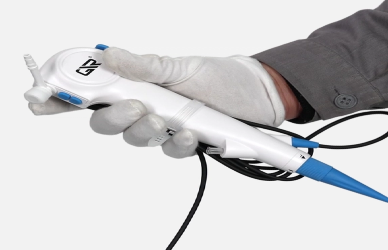
One of the most significant applications of Flexible Ureteroscopes is the detection of urothelial tumors. These devices provide high-definition visualization, enabling physicians to identify small or flat lesions that imaging might miss. Early detection is critical, as diagnosing malignancies at an early stage significantly improves treatment outcomes and survival rates. Flexible ureteroscopy allows not only visualization but also biopsy sampling for histopathological confirmation.
Urinary stones and strictures are common causes of both microscopic and gross hematuria. With their flexibility and maneuverability, Flexible Ureteroscopes can navigate through the ureter and renal pelvis to identify stones or narrowed segments of the urinary tract. Additionally, stones can be managed in the same session using laser lithotripsy, while strictures can be assessed and treated endoscopically, reducing the need for multiple procedures.
Recurrent urinary tract infections (UTIs) often present with hematuria, and their underlying causes may include stones, anatomical abnormalities, or persistent mucosal inflammation. Flexible Ureteroscopes enable direct visualization of the urinary lining, allowing for the detection of subtle changes or hidden infections not visible on imaging. This helps physicians tailor treatment strategies, reducing recurrence and improving patient outcomes.
In pediatric patients, hematuria may be linked to congenital anomalies such as ureteropelvic junction obstruction, duplicated collecting systems, or small congenital strictures. The delicate tissues and smaller anatomy in children require precise and minimally invasive tools. Flexible Ureteroscopes are particularly valuable in this setting, as their slim design and high-definition imaging allow for safe evaluation and early diagnosis, minimizing trauma and long-term complications.
Using Flexible Ureteroscopes in hematuria evaluation requires focused skills. Training helps urologists identify tumors, stones, or inflammation accurately while ensuring safe navigation of the urinary tract.
Simulation training allows clinicians to practice handling scopes in realistic settings. This improves navigation, reduces errors, and increases efficiency in real procedures.
Regular updates on new protocols and scope technology ensure accurate diagnosis and safe, modern hematuria evaluation.
Flexible Ureteroscopes play a vital role in modern hematuria evaluation by enabling direct, precise, and minimally invasive diagnosis. Unlike imaging alone, they allow clinicians to identify small lesions, strictures, or early-stage tumors that might otherwise be missed.
By supporting early detection and timely treatment, Flexible Ureteroscopes significantly improve patient outcomes, reduce complications, and provide tailored care for both adult and pediatric patients.
For healthcare providers aiming to enhance diagnostic accuracy and safety, adopting advanced ureteroscopic evaluation protocols is a crucial step. Partnering with specialized urology centers and trusted equipment suppliers ensures access to reliable devices and expert guidance, helping deliver the best patient care.


