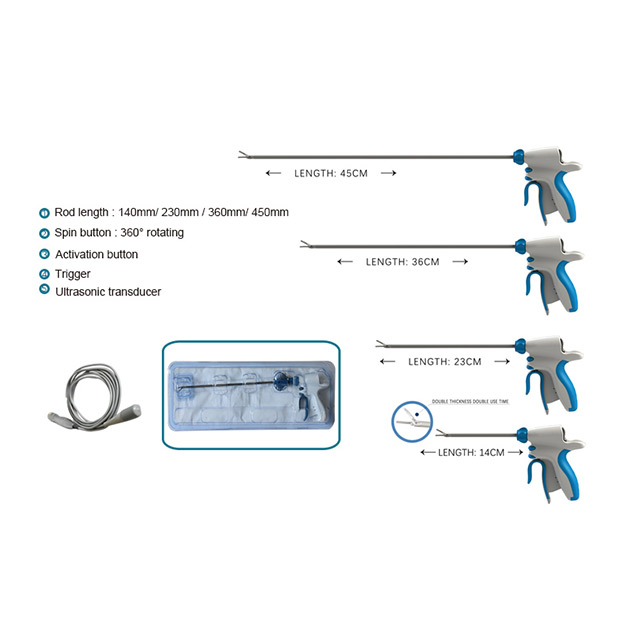
1. What is an Ultrasonic Scalpel?
An ultrasonic scalpel is a surgical device that uses high-frequency ultrasonic vibrations to cut and coagulate tissue simultaneously. It is commonly used in minimally invasive surgeries (laparoscopic and robotic procedures) for precision and reduced blood loss.
2. How does an Ultrasonic Scalpel work?
The device converts electrical energy into mechanical vibrations (typically at 55,500 Hz). The vibrating blade cuts through tissue while the friction generates heat, sealing blood vessels and minimizing bleeding.
3. What are the advantages of using an Ultrasonic Scalpel?
Precision cutting with minimal thermal damage to surrounding tissues.
Reduced bleeding due to simultaneous coagulation.
Less smoke production compared to electrocautery, improving visibility.
Minimal charring, leading to faster patient recovery.
4. In which surgeries is the Ultrasonic Scalpel commonly used?
General Surgery (e.g., thyroidectomy, hernia repair)
Gynecological Surgery (e.g., hysterectomy)
Urological Surgery (e.g., prostatectomy)
Bariatric Surgery (e.g., gastric bypass)
ENT & Plastic Surgery
5. Is the Ultrasonic Scalpel safe?
Yes, when used by trained surgeons, it is a safe and effective tool. The risk of unintended thermal injury is lower than with electrocautery, but proper technique is essential.
6. How does the Ultrasonic Scalpel compare to Electrocautery or Laser?
Electrocautery uses electrical current, which can cause more thermal spread.
Laser is precise but expensive and may produce more smoke.
Ultrasonic Scalpel offers a balance of precision, coagulation, and minimal collateral damage.
7. Does the Ultrasonic Scalpel require special training?
Yes, surgeons and operating room staff should receive training to ensure proper handling, optimal settings, and safety precautions.