


Views: 0 Author: Site Editor Publish Time: 2025-10-18 Origin: Site


The advancement of 4K Endoscope Camera Systems has redefined the standards of visualization in minimally invasive surgery (MIS). From laparoscopic and arthroscopic operations to urological and ENT procedures, the ability to visualize intricate anatomical details with unmatched clarity is transforming how surgeons diagnose, operate, and make real-time decisions.
This article explores the clinical advantages of 4K endoscopic technology, explaining how optical precision, digital enhancement, and intelligent image processing contribute to better surgical outcomes and patient safety.
4K Endoscope Camera Systems refer to advanced imaging platforms that capture and display surgical visuals at a resolution of 3840 x 2160 pixels, four times higher than standard HD. This level of detail allows surgeons to observe microstructures such as fine vessels, nerve fibers, and tissue layers that were previously difficult to distinguish.
Each system typically includes:
4K camera head with high-sensitivity CMOS or CCD sensors
Optical couplers and lenses optimized for minimal distortion
LED or xenon light sources for consistent illumination
Image processors with color correction and dynamic contrast algorithms
4K monitors offering high brightness and true-to-life color rendering
These elements work together to provide lifelike images that enhance both spatial awareness and depth perception, essential for delicate surgical maneuvers.
The journey from standard definition to 4K surgical visualization represents decades of technological innovation. Early endoscopic systems offered limited clarity, making it difficult to differentiate tissue boundaries or microstructures. HD (1080p) improved this, but 4K resolution now delivers surgical visuals with four times the pixel density, creating an immersive visual field.
Feature | HD Endoscope | 4K Endoscope |
Resolution | 1920×1080 pixels | 3840×2160 pixels |
Color Accuracy | Moderate | True-to-life color fidelity |
Depth Perception | Limited | Enhanced through pixel density |
Noise Reduction | Basic digital filters | Advanced real-time algorithms |
Image Zoom | Loss of detail | Clear, detailed even at 2× zoom |
The evolution toward 4K endoscopic technology has empowered surgeons with tools that enhance accuracy, minimize guesswork, and improve postoperative outcomes.
The greatest advantage of 4K Endoscope Camera Systems is the ability to produce sharper, more detailed images. The high resolution allows surgeons to visualize micro-anatomical structures that could previously be overlooked, improving the identification of surgical planes, vascular patterns, and pathological tissues.
With increased pixel density and color depth, subtle tissue changes such as inflammation, bleeding points, or early-stage lesions become visible. Surgeons can distinguish between healthy and abnormal tissues more easily, resulting in:
More precise dissection
Reduced risk of collateral damage
Improved tumor margin identification
In minimally invasive surgery, depth perception is critical for instrument control. 4K technology, with its refined pixel geometry and enhanced contrast, enables more natural depth cues, allowing surgeons to judge distances more intuitively even on a flat display.
4K endoscopic imaging provides the foundation for safer, more accurate surgical performance. When surgeons can clearly see the anatomy in real time, the likelihood of unintentional errors or injuries decreases significantly.
Faster Decision-Making: High-definition visuals allow immediate recognition of anatomical variations or complications.
Reduced Eye Strain: The clarity of 4K reduces fatigue during long surgeries.
Improved Team Coordination: The operating team shares the same crisp image on large 4K monitors, facilitating synchronized movements and better communication.
Smaller Incisions: Improved visualization supports even less invasive approaches.
Reduced Blood Loss: Precise tissue manipulation leads to minimal trauma.
Faster Recovery: Better surgical control reduces postoperative complications.
Overall, 4K Endoscope Camera Systems make surgery not only safer for patients but also more efficient for healthcare professionals.
Modern surgery relies heavily on minimally invasive techniques that reduce trauma and improve recovery. 4K visualization complements these goals by giving surgeons the clarity needed to perform intricate procedures through tiny incisions.
Laparoscopy: Enhanced visualization of abdominal structures during gallbladder, hernia, and colorectal surgeries.
Arthroscopy: Improved joint visualization for orthopedic procedures.
Urology: High-resolution imaging for prostate, kidney, and bladder operations.
Gynecology: Better visualization of uterine and ovarian anatomy.
ENT (Otolaryngology): Clear identification of fine nasal and laryngeal structures.
4K Endoscope Camera Systems integrate seamlessly with robotic-assisted surgical platforms and image-guided systems. Surgeons benefit from improved hand-eye coordination, enabling more precise robotic instrument movements and enhanced procedural accuracy.
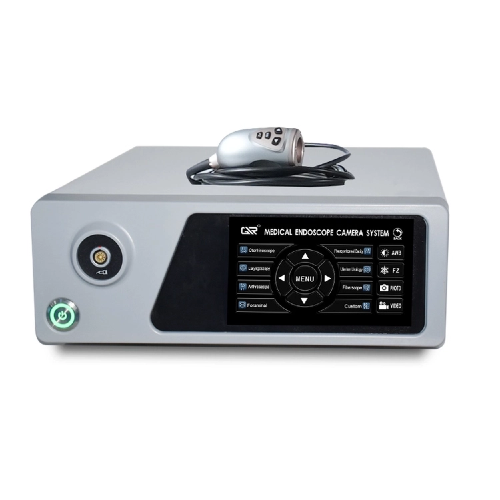
Advanced 4K systems employ intelligent image processing algorithms that optimize brightness, sharpness, and color balance in real time. These enhancements maintain clarity even in low-light surgical environments.
Dynamic Range Enhancement: Maintains visual detail in both bright and shadowed areas.
Noise Reduction Algorithms: Minimize digital interference without sacrificing image sharpness.
Color Correction: Ensures realistic representation of tissue tones for accurate diagnosis.
Edge Enhancement: Highlights boundaries to make fine structures more visible.
These digital refinements collectively ensure that every frame displayed on a 4K monitor delivers maximum informational value to the surgical team.
Beyond clinical precision, 4K endoscopic systems provide significant ergonomic and educational benefits.
The clarity and stability of 4K imagery reduce eye fatigue and enhance comfort during extended procedures. Surgeons can operate in a more natural posture, improving workflow efficiency.
For teaching hospitals and medical institutions, 4K Endoscope Camera Systems offer unmatched educational value. Trainees can observe surgeries in ultra-high definition, understanding complex anatomy and procedural techniques more effectively.
Feature | Training with HD | Training with 4K |
Clarity of anatomical details | Limited | Exceptional |
Learning curve for residents | Steep | Shortened due to clearer visuals |
Educational recording | Standard | Enhanced with vivid resolution |
Remote teaching capability | Moderate | Ideal for 4K streaming and virtual learning |
This makes 4K technology not only a clinical tool but also a valuable resource for continuous surgical education.
While 4K systems represent a higher initial investment than HD systems, the long-term benefits outweigh the costs. Hospitals and clinics report improved surgical throughput, reduced complications, and fewer repeat procedures—each translating to cost savings.
Reduced Operating Time: Clearer visuals lead to faster, more confident execution.
Lower Training Costs: Enhanced visual learning shortens skill acquisition time.
Fewer Equipment Upgrades: 4K platforms are future-proof, supporting upcoming AI-assisted imaging tools.
In essence, 4K Endoscope Camera Systems provide measurable returns in both clinical performance and economic sustainability.
As artificial intelligence and 3D visualization technologies evolve, 4K imaging serves as the foundation for future innovation. Combining 4K resolution with AI-based image recognition, surgeons can expect even greater assistance in identifying anatomical structures, tracking instruments, and automating parts of the surgical process.
Future advancements will likely include:
8K surgical visualization for ultra-fine details
AI-assisted decision support systems
Integration with augmented reality overlays
Real-time data analytics and remote surgical monitoring
These innovations will continue to rely on the clarity and data richness provided by 4K imaging as their visual backbone.
Selecting a 4K system requires evaluating image quality, compatibility, ease of use, and service support. Surgeons and hospitals should partner with experienced manufacturers capable of providing customized imaging solutions for specific clinical applications.
Sensor Quality: Prefer CMOS sensors with low-light optimization.
Color Accuracy: Evaluate calibration and consistency.
Latency and Refresh Rate: Ensure real-time response.
Ergonomics: Lightweight camera heads for ease of handling.
After-Sales Service: Availability of technical support and upgrades.
Xuzhou Hengjia Electronic Technology Co., Ltd. specializes in the design and development of high-performance 4K Endoscope Camera Systems for surgical applications. With expertise in optical and electronic engineering, the company delivers products that combine precision, reliability, and clinical efficiency. Their solutions are trusted by hospitals and distributors for consistent imaging excellence and durable system performance.
The introduction of 4K Endoscope Camera Systems marks a transformative milestone in the field of minimally invasive surgery, reshaping how surgeons visualize and interact with internal anatomy. By combining cutting-edge optical engineering, high-sensitivity imaging sensors, and intelligent real-time digital processing, these systems deliver images with unmatched clarity, depth, and precision. Surgeons can now identify microstructures, differentiate tissues, and navigate complex anatomical pathways with greater confidence, leading to improved diagnostic accuracy and safer surgical outcomes.
Beyond their visual superiority, 4K Endoscope Camera Systems also enhance the overall surgical workflow—reducing eye strain, supporting more efficient teamwork, and enabling seamless integration with robotic and image-guided platforms. As hospitals and surgical centers continue to adopt new technologies in pursuit of better patient care, 4K visualization is rapidly becoming the new global benchmark in modern operating rooms.
For healthcare professionals and distributors seeking reliable, high-performance endoscopic imaging solutions, Xuzhou Hengjia Electronic Technology Co., Ltd. stands out as a trusted partner. With strong expertise in optical design and electronic precision, the company delivers innovative 4K imaging systems that embody clinical excellence, long-term stability, and technology-driven healthcare advancement.


