


Views: 0 Author: Site Editor Publish Time: 2025-10-23 Origin: Site


The development of 4K Endoscope Camera Systems has revolutionized minimally invasive surgery (MIS) and other advanced surgical procedures. With unparalleled image clarity, real-time digital processing, and superior color fidelity, these systems empower surgeons to make precise decisions, enhance operational efficiency, and significantly improve patient outcomes. As healthcare institutions continue to adopt cutting-edge imaging technologies, understanding the application of 4K endoscopes across different surgical specialties is essential for optimizing clinical performance.
Not all 4K systems are equal; factors such as sensor quality, optical design, illumination, processing capabilities, and ergonomic design can dramatically influence surgical success. This comprehensive guide explores the clinical applications of 4K Endoscope Camera Systems in key surgical fields, comparing their advantages, limitations, and practical considerations for hospitals and surgical centers.
ENT procedures involve complex, narrow anatomical spaces, where precision and visibility are critical. Traditional HD endoscopes often fail to provide sufficient detail in these delicate regions, which can compromise diagnostic accuracy and surgical safety. 4K Endoscope Camera Systems overcome these limitations, offering surgeons enhanced resolution, wider fields of view (FOV), and superior color fidelity.
One of the most significant advantages of 4K endoscopy in ENT surgery is the ability to clearly visualize intricate structures such as:
Vocal cords and larynx for microsurgical procedures
Nasal passages and sinuses for endoscopic sinus surgery
Middle ear structures during tympanoplasty and cochlear implantation
The combination of small-diameter scopes and wide FOV ensures that surgeons can navigate narrow cavities without losing spatial awareness. The increased pixel density also allows the detection of micro-lesions, early-stage polyps, or subtle inflammation that could otherwise be overlooked.
Enhanced visualization leads to several clinical advantages:
Reduced risk of iatrogenic injury during delicate dissection
Improved surgical precision, reducing recurrence of sinus polyps or laryngeal lesions
Better intraoperative documentation, supporting medical education and case review
For example, in endoscopic sinus surgery, 4K imaging enables surgeons to differentiate inflamed tissue from healthy mucosa, which reduces postoperative complications and improves patient recovery times.
Urological procedures, including cystoscopy, ureteroscopy, laparoscopic kidney surgery, and prostate procedures, benefit significantly from high-resolution 4K imaging. The urinary tract’s narrow passages and delicate tissues demand precision, which 4K endoscope systems are uniquely capable of providing.
4K Endoscope Camera Systems enhance urological surgery by providing:
High-resolution imaging for accurate navigation of the bladder, ureters, and kidneys
Real-time differentiation between healthy and pathological tissues
Enhanced control over instrument placement, minimizing trauma to adjacent structures
This is particularly crucial in tumor resections, stone removal, or biopsy procedures. Accurate imaging reduces inadvertent damage, shortens operative time, and improves patient safety.
Cystoscopy: 4K systems allow for the detection of minute bladder lesions or early-stage tumors that might be missed with HD cameras.
Ureteroscopy: High-resolution imaging aids in identifying and removing kidney stones with precision.
Prostate procedures: Accurate visualization of vascular and neural structures reduces the risk of post-surgical complications, including incontinence or erectile dysfunction.
By improving diagnostic confidence and surgical precision, 4K systems contribute to better overall outcomes in urology.
Gynecological surgeries, including hysteroscopies, laparoscopic ovarian procedures, and fibroid removal, require high-definition imaging for safe and effective interventions. 4K Endoscope Camera Systems provide superior visual clarity that allows surgeons to perform delicate procedures while minimizing risks to healthy tissue.
High-resolution imaging enables:
Clear visualization of the uterine cavity, fallopian tubes, and ovaries
Precise detection of fibroids, polyps, and early-stage lesions
Identification of subtle vascular structures to reduce intraoperative bleeding
The improved depth perception and color fidelity offered by 4K systems allow surgeons to distinguish between normal and pathological tissue more accurately, which is critical in fertility-preserving procedures.
Precision in tissue removal: Reduces trauma to surrounding healthy tissue, minimizing complications
Reduced operative time: Enhanced visualization allows for more efficient procedures
Training and collaboration: High-quality imaging supports teaching, case review, and telemedicine consultation
For minimally invasive gynecological interventions, 4K systems represent a paradigm shift in patient safety, procedural efficiency, and clinical outcomes.
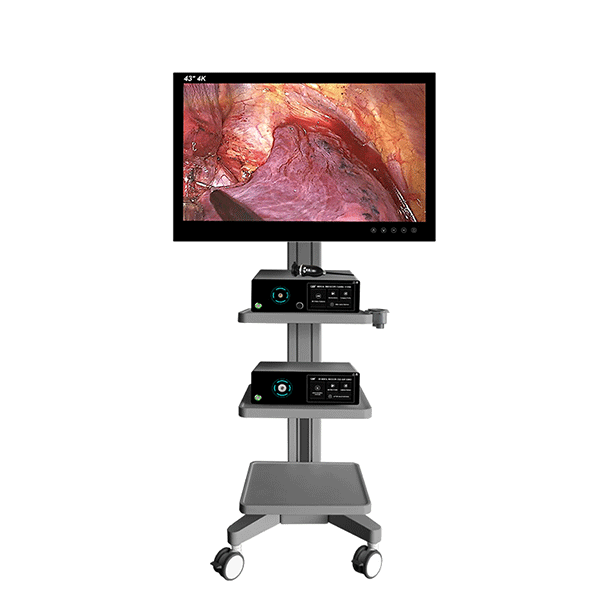
Laparoscopic and abdominal surgeries involve multiple organs and intricate anatomical structures, requiring surgeons to carefully navigate tissue planes, vascular networks, and delicate nerves. 4K Endoscope Camera Systems provide the ultra-high-definition clarity and detailed imagery necessary for these complex procedures, enabling surgeons to perform dissections with greater precision, confidence, and efficiency.
With 4K imaging, surgeons can perform detailed examinations of critical abdominal organs, including the gallbladder, colon, liver, and spleen. The superior resolution allows subtle anatomical features, such as microvascular structures, ligaments, and tissue layers, to be distinguished clearly. Enhanced depth perception and accurate color reproduction further aid in identifying healthy versus pathological tissue, which is essential for reducing the risk of inadvertent injury during surgery.
The benefits of 4K endoscopy extend beyond visualization. Surgeons can make faster intraoperative decisions, as clearer images allow rapid assessment of tissue viability and procedural progress. Reduced uncertainty shortens operation times, while precise dissection lowers the likelihood of complications, ultimately contributing to better patient outcomes and faster recovery.
For instance, during laparoscopic cholecystectomy, 4K systems enable surgeons to carefully dissect the cystic duct and artery, significantly reducing the risk of bile duct injury—a common concern in minimally invasive gallbladder procedures. Such precision improves both safety and overall procedural success.
Beyond standard ENT, urology, gynecology, and laparoscopy, 4K endoscopy is making inroads into specialized fields such as:
Joint visualization and cartilage repair
High magnification allows precise evaluation of meniscal tears or ligament injuries
Lung biopsies and mediastinal procedures
Improved imaging reduces the risk of pneumothorax and ensures accurate tumor localization
Spinal and cranial minimally invasive interventions
Enhanced tissue differentiation supports safe resection of lesions and reduces neurological complications
In these complex surgeries, 4K endoscopes provide high-definition images, allowing surgeons to operate with greater precision and confidence.
Surgical Field | Key Procedures | 4K Benefits | Clinical Outcome |
ENT | Sinus, laryngeal surgery | High resolution, wide FOV, color accuracy | Reduced complications, improved precision |
Urology | Cystoscopy, ureteroscopy | Real-time differentiation, enhanced navigation | Better tumor detection, safer procedures |
Gynecology | Hysteroscopy, fibroid removal | Clear cavity view, tissue preservation | Minimized tissue trauma, faster recovery |
Laparoscopy | Gallbladder, colorectal | Enhanced depth, vessel identification | Shorter operation time, improved outcomes |
Orthopedic/Neurosurgery | Joint/spinal interventions | High magnification, precise imaging | Enhanced surgical accuracy |
Selecting the ideal 4K Endoscope Camera System requires careful evaluation of both specialty-specific clinical requirements and broader operational considerations. One of the first factors to consider is the scope diameter and field of view (FOV). For ENT procedures, small-diameter scopes provide the maneuverability needed to navigate narrow anatomical spaces, while abdominal and laparoscopic surgeries often require larger FOVs to visualize extensive organ structures clearly.
Lighting and illumination are equally critical. Surgeons must choose between LED, Xenon, or hybrid lighting systems depending on procedural needs and the surgical environment. High-quality illumination enhances tissue contrast and color accuracy, especially in low-light conditions or deep cavities.
The digital processing capabilities of the system—such as noise reduction, dynamic range enhancement, and AI-assisted visualization—directly impact image clarity, depth perception, and real-time decision-making. Seamless integration with operating room (OR) systems, including robotic platforms, telemedicine setups, and video recording, ensures workflow efficiency and facilitates collaborative procedures.
Ergonomics and sterilization are also key considerations. Lightweight camera heads, modular designs, and sterilizable components reduce fatigue, simplify maintenance, and comply with infection control protocols. Finally, hospitals should evaluate budget, after-sales support, and training availability to ensure long-term reliability and clinical success.
Xuzhou Hengjia Electronic Technology Co., Ltd. offers a comprehensive range of 4K endoscope systems that meet these stringent criteria, providing durable, high-performance solutions for diverse surgical specialties while supporting surgeons and medical teams with advanced training and technical assistance.
The evolution of 4K endoscopy continues to intersect with AI, robotics, and augmented reality:
AI-assisted visualization: Real-time lesion detection and tissue differentiation
Wireless and networked systems: Improved OR flexibility and reduced cable clutter
Integration with robotic-assisted surgery: Enhanced precision and minimally invasive access
8K ultra-high-definition imaging: Next-generation clarity for microvascular and neural procedures
AR/VR overlays: Real-time guidance for complex anatomical navigation
These advancements will continue to rely on high-quality 4K imaging as the foundation for enhanced surgical safety and improved patient outcomes.
4K Endoscope Camera Systems have transformed surgical practice across multiple fields, providing unmatched clarity, precision, and operational efficiency. By enhancing visualization in ENT, urology, gynecology, laparoscopy, and specialized surgeries, these systems enable:
Accurate tissue differentiation
Reduced operative complications
Shorter operation times
Improved patient outcomes and faster recovery
Healthcare providers seeking reliable, high-performance 4K endoscopic solutions should consult experienced manufacturers, such as Xuzhou Hengjia Electronic Technology Co., Ltd., which offer customizable, durable, and advanced imaging systems designed for modern surgical environments.
By integrating the right 4K system into the operating room, surgeons gain a powerful tool to improve procedural accuracy, optimize workflow, and ultimately enhance patient care across multiple surgical disciplines.


