


Views: 0 Author: Site Editor Publish Time: 2026-07-19 Origin: Site


The transition from standard HD to ultra-high-definition imaging in operating rooms is no longer a luxury. It has become a vital standard of care for today's most complex procedures. Surgeons require exceptional visual clarity. They need it to navigate delicate anatomical structures safely and efficiently. However, outdated hardware often introduces invisible barriers to success.
This article moves beyond basic spec sheets. We evaluate how a modern 4k endoscope camera directly impacts clinical efficacy, surgical safety, and facility returns. True precision surgery demands a holistic system. Resolution, color accuracy, and low latency must intersect seamlessly. They must do so without causing operational bottlenecks.
You will learn how to identify clinical gaps in legacy equipment. We will also show you how next-generation ecosystems deliver reliable outcomes for modern surgical teams. Upgrading infrastructure prepares your facility for the future of minimally invasive surgery.
4K resolution (3840 x 2160) reduces surgical eye fatigue and allows for digital zooming without critical loss of detail.
Wider color gamuts (e.g., BT.2020) are essential for distinguishing micro-vasculature and subtle tissue margins in oncology and neurology.
A functional 4k endoscope camera system requires an end-to-end infrastructure upgrade, including compatible light sources, CCUs (Camera Control Units), and medical-grade monitors.
Evaluating a system requires balancing clinical benefits (fluorescence compatibility) with implementation realities (latency, data storage, and cross-brand compatibility).
Standard 1080p resolution served operating rooms well for many years. Today, it struggles significantly in micro-environments. When surgeons digitally zoom in on fine anatomical structures, standard HD breaks down. The image pixelates rapidly. This loss of clarity forces surgeons to physically push the scope closer to the target. Doing so risks unintended tissue damage in tight anatomical spaces. It also limits the visible field of work.
Cognitive load and eye strain heavily plague older systems. Poor contrast and limited depth of field force surgeons to constantly adjust focus manually. Over prolonged procedures, this causes significant physical and mental fatigue. Eyes strain constantly to differentiate blurred margins. Surgeons often report headaches and decreased concentration during lengthy minimally invasive cases. These ergonomic failures directly impact patient safety and surgical precision.
Precision visualization requires strict success criteria. An acceptable 4k endoscope camera system must deliver continuous, zero-latency rendering. We need absolute clarity of fine tissues like nerves and mucosal layers. Lighting conditions vary constantly during an active surgery. Blood and fluids reflect light unpredictably. The camera must adapt instantly. It must keep the surgical field crisp, clear, and perfectly illuminated under all circumstances.
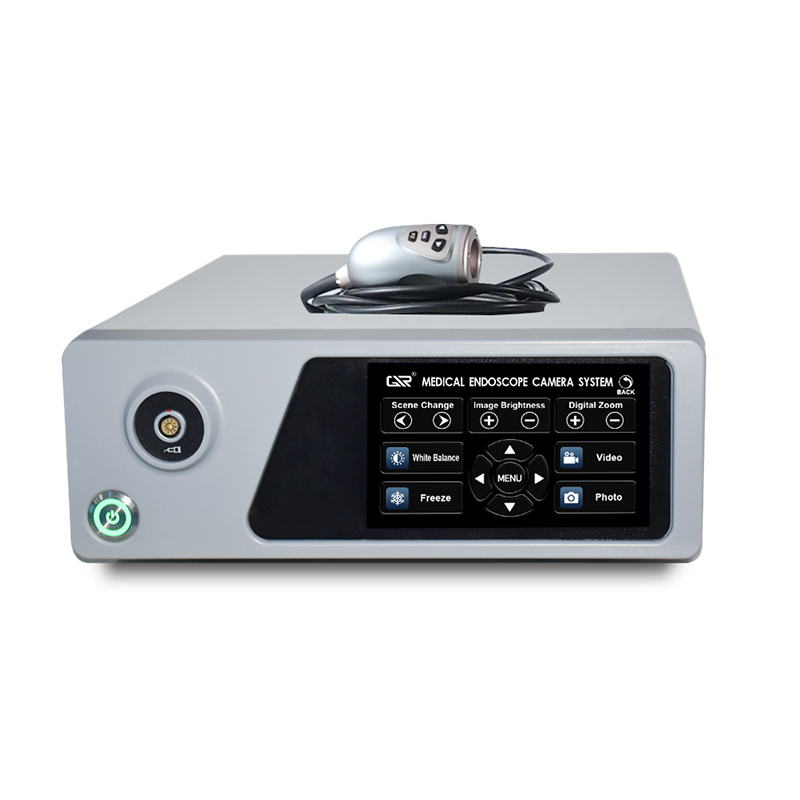
True 4K resolution provides four times the pixel density of Full HD. This massive increase in detail changes how surgeons interact with patient anatomy. It enables them to operate virtually closer to the tissue. They can use digital zoom extensively without losing vital clarity. This direct outcome reduces the physical need to maneuver the scope aggressively. It keeps the camera head stable. A stable camera reduces operative friction and speeds up the procedure safely.
Enhanced color reproduction relies on broadened color spectrum capabilities. Older cameras compress color data heavily. Modern sensors capture nuanced shades accurately using wider gamuts like BT.2020. This outcome is critical for identifying subtle differences. Surgeons can easily distinguish healthy tissue, fat, and malignant margins. Gastrointestinal and gynecological oncology see massive benefits from this precise color distinction. Better color rendering leads to more accurate tissue resections.
Light management and depth of field depend on advanced CMOS sensors. These sensors pair perfectly with automated light control algorithms. Highly reflective tissues often cause camera glare. These algorithms prevent blooming or overexposure immediately. The clinical outcome is a perfectly balanced image. Surgeons maintain sharp focus across a much deeper surgical cavity. They spend less time adjusting the light source manually.
Below is a Clinical Outcomes Breakdown for modern visualization platforms:
Core Feature | Technical Spec | Direct Clinical Outcome |
|---|---|---|
True 4K Resolution | 3840 x 2160 pixels | Enables safe digital zooming in tight spaces. |
Enhanced Color Gamut | BT.2020 compatibility | Improves identification of subtle malignant margins. |
Advanced Light Management | Automated CMOS control | Prevents glare and maintains deep cavity focus. |
High Frame Rate | 60 fps native output | Eliminates motion blur during fast instrument movement. |
Modern operating rooms demand interconnected digital tools. A high-end surgical endoscope camera rarely works in isolation. Integration into broader technological ecosystems defines its true value.
Combining 4K clarity and fluorescence imaging represents a massive leap forward. Near-Infrared (NIR) or Indocyanine Green (ICG) technologies unlock hidden anatomical details. This combination allows for highly precise tumor mapping. Surgeons can also assess tissue perfusion in real time. They see glowing biological markers overlaid onto a crystal-clear 4K feed. This synergy helps prevent anastomotic leaks in colorectal surgeries. It also assists in identifying critical bile ducts during cholecystectomies.
Data pipelines form the backbone of seamless OR integration. Routing ultra-high-definition video requires massive bandwidth. Standard cables cannot handle uncompressed 4K signals. Systems use 12G-SDI cables or advanced optical fiber networks. These pipelines route uncompressed video to secondary monitors smoothly. They also supply live feeds to teaching hospitals without signal degradation. If the data pipeline bottlenecks, the surgical image stutters. Image stuttering poses a severe risk during active dissection. Hospitals must upgrade their internal routing infrastructure simultaneously.
For hospital procurement teams, upgrading technology centers on clinical returns. Clearer visualization yields significant efficiency gains. Surgeons navigate complex anatomical spaces much faster. This efficiency theoretically reduces overall operative time per case. Shorter cases maximize OR utilization rates. Clearer imaging also lowers the risk of costly surgical complications. Better patient outcomes directly benefit the hospital's reputation and bottom line.
Future-proofing is another major procurement consideration. Investing in a native 4K ecosystem prevents premature equipment obsolescence. Surgical techniques evolve rapidly toward micro-interventions. A robust digital foundation ensures the OR remains highly capable for years. Hospitals avoid piecemeal upgrades. They establish a unified standard across all surgical departments.
Medical device dealers face a shifting OR landscape. They must adapt their value proposition continuously. The sales narrative moves away from raw hardware specs alone. Dealers now focus on clinical outcomes and lifecycle reliability. They sell confidence, precision, and workflow efficiency.
This shift also opens lucrative new service opportunities. High-end systems require specialized installation protocols. Calibration and preventative maintenance contracts become essential ongoing revenue streams. Dealers provide massive value by keeping complex systems running flawlessly. They act as strategic partners rather than simple hardware vendors.
Procuring the right equipment demands a highly structured approach. Use these critical pillars to evaluate any new imaging system.
Latency Benchmarking: This remains the most critical risk factor. A 4K image is utterly useless if image processing introduces a delay. A lag between hand movement and screen display causes catastrophic surgical errors. Frame rates must reliably hold at 60fps at all times. Latency must stay below human perception.
Ecosystem Compatibility: Assess your broader OR environment carefully. Determine whether the new camera head requires proprietary light sources. Check existing monitor compatibility. Open architecture systems provide vital flexibility for mixed-fleet operating rooms. Closed systems force expensive, full-suite upgrades.
Ergonomics and Heat Dissipation: 4K sensors process massive data loads constantly. This processing generates significant heat. Evaluate the physical weight and balance of the camera head. Surgeons hold these devices for many hours. Effective thermal management prevents hand fatigue. It also protects the sterile drape from melting.
Regulatory and Security Compliance: Patient safety extends into digital data. Ensure the entire system meets FDA or CE MDR standards strictly. Any connected data storage must comply completely with HIPAA or GDPR frameworks. Patient data protection remains a non-negotiable requirement for modern hospitals.
Adopting a 4K visualization system represents a major clinical and operational commitment. It is never just a simple hardware swap. The best platforms balance ultra-high-definition imaging seamlessly. They deliver zero-latency performance reliably. They integrate robustly into your daily clinical workflow. You must align your surgical needs directly to your technological infrastructure.
Upgrading improves surgical precision instantly. It reduces physical eye strain for your staff. Most importantly, it protects patient safety during delicate procedures. Proper implementation requires careful planning and rigorous ecosystem evaluation.
Take immediate action today to modernize your OR infrastructure.
Request a clinical trial or live system demonstration.
Download a comprehensive cross-brand compatibility checklist.
Consult an OR integration specialist to map your data pipelines.
A: The optical scope and the camera head are separate components. You can technically attach standard scopes to a new camera head. However, specialized 4K-rated optics are absolutely necessary. Without them, you cannot realize the full resolution benefit. Older scopes often cause severe edge distortion on modern high-resolution sensors.
A: 4K video files introduce substantial data bloat. They are significantly larger than standard HD files. You will require robust PACS integration immediately. Alternatively, hospitals must invest in dedicated surgical media management servers. These servers handle the rapidly increasing storage load securely and efficiently.
A: Early generations struggled with lag due to heavy image processing demands. Modern medical-grade systems solve this problem completely. They utilize highly specialized processors. These processors keep image latency well below the human perception threshold. The delay typically remains under 30 milliseconds.


