


Views: 0 Author: Site Editor Publish Time: 2026-07-23 Origin: Site


Sourcing high-quality urology instruments remains a complex challenge for healthcare facilities today. You must balance the demanding surgical precision urologists require with the strict procurement budgets hospital administrators enforce. Modern stone management relies heavily on these tools to deliver positive patient outcomes.
Purchasing decisions often overemphasize initial price tags while ignoring long-term clinical viability. The true value of a urology scope depends heavily on structural durability and daily reprocessing compatibility. High failure rates during routine sterilization can cripple surgical schedules, delay critical care, and compromise overall patient safety.
This guide gives procurement teams, biomedical engineers, and clinical leads a clear, evidence-based framework for evaluating vendors. We will thoroughly explore optical performance standards, infrastructure compatibility, and service level agreements. You will learn exactly what specifications matter most when upgrading your urology department effectively.
Optical Longevity: High-resolution rod-lens systems must withstand repeated sterilization without moisture ingress.
Infrastructure Interoperability: A new endoscopic ureteroscope must integrate seamlessly with existing light sources, camera systems, and lithotripsy tools to avoid compounding costs.
Total Cost of Ownership (TCO): Vendor evaluation must weigh warranty terms, repair frequency, and loaner-equipment availability over initial purchase price.
Atraumatic Design: Instrument specifications (French size, tapered tips) directly impact patient trauma and operative efficiency.
Surgeons rely on pristine visibility to navigate narrow ureteral passages safely. A high-quality rigid ureteroscope utilizes an intricate system of glass rods to relay images. You must evaluate the center-to-edge resolution meticulously during vendor demonstrations. Push vendors to show complete image clarity without peripheral distortion. Blurry edges obscure tiny stone fragments. They also hide delicate mucosal linings. Missed stone fragments often lead to repeat surgeries.
The embedded glass fibers deliver essential illumination to the surgical site. You should carefully assess the density and quality of these fibers. Ask vendors for historical performance data regarding fiber degradation over time. Poor quality fibers break easily. Broken fibers create dark spots in the surgical field. Furthermore, repeated heat exposure turns cheap glass fibers yellow or brown. Poor light transmission severely limits visibility during complex laser lithotripsy cases.
Clinical teams require specific viewing angles for different anatomical needs. Standardize your clinical requirements before engaging vendors. Common options include 0°, 5°, or 12° angles. A straight 0° lens provides excellent forward vision. However, an offset angle like 5° or 12° helps surgeons visualize instruments as they exit the working channel. Match the direction of view to the exact navigation habits of your urology team.
Test the scope using your hospital's lowest-performing light source to see true baseline capabilities.
Examine a resolution test target to quantify edge distortion objectively.
Ask surgeons to read fine print through the scope from a distance of one inch.
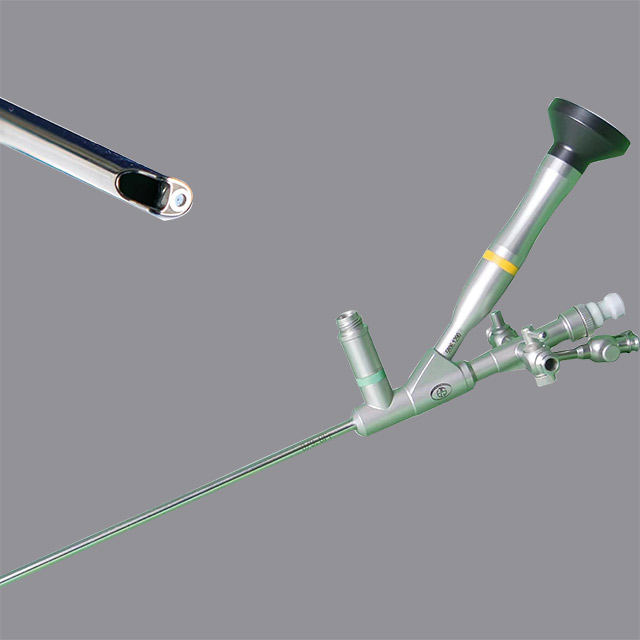
Sterilization cycles destroy low-quality endoscopes rapidly. Hospitals must select highly robust instruments. They need to survive the harsh environment of your sterile processing department.
You should verify steam sterilization compatibility immediately. Ensure the scope survives standard hospital autoclaving protocols. This practice must not void the manufacturer's warranty. Steam sterilization offers significantly faster turnaround times than chemical immersion methods. Fast turnarounds keep your surgical schedules running smoothly.
Fluid invasion causes the vast majority of optical scope failures. Investigate the specific sealing technology securing the objective lens. Check the seals around the light post joints. Cheap epoxies degrade over time through thermal shock. Advanced scopes use laser welding or specialized high-temperature brazing. A breached seal leads to internal lens fogging. Once fogging occurs, the instrument becomes entirely useless mid-surgery.
Daily handling subjects these delicate tools to heavy abuse. Assess the rigidity of the outer metallic sheath. High-grade stainless steel resists bending. Specialized metal alloys offer excellent scratch resistance. A scratched sheath traps dangerous surgical bioburden. This trapped material invites biofilm formation and risks cross-contamination.
Sterilization Type | Turnaround Speed | Thermal Stress Level | Workflow Efficiency |
|---|---|---|---|
Steam Autoclaving | Fast (45-60 mins) | High | Excellent |
Ethylene Oxide (EtO) | Very Slow (12+ hours) | Low | Poor |
Liquid Chemical | Moderate (2-4 hours) | Low | Fair |
Adding new surgical tools often disrupts established clinical workflows. You must ensure seamless integration within your current operating room setup.
Check the light post and eyepiece connections carefully. They must offer universal compatibility across your current OR visualization towers. Most manufacturers use standard connections. However, some utilize proprietary locking mechanisms. If the connections do not match perfectly, ensure standard light cable adapters can bridge the gap. You should never buy a scope requiring a completely new visualization system. Look for adapters supporting Storz, Wolf, or ACMI light cables.
The instrument channel diameter strictly determines which surgical tools doctors can use. We measure this internal diameter in French (Fr). You must match this size against the hospital’s preferred lithotripsy equipment. Consider the precise fit of holmium laser fibers. Check the compatibility of pneumatic probes and stone retrieval baskets. A tightly fitting instrument restricts vital irrigation flow. Poor irrigation flow blurs the surgeon's vision instantly due to floating debris.
Introducing a proprietary rigid ureteroscope,endoscopic ureteroscope creates isolated equipment silos. Avoid brands requiring single-brand accessories exclusively. Proprietary accessories consistently inflate ongoing procurement budgets. Stick to open-architecture equipment unless you plan a comprehensive system overhaul. Standardized equipment simplifies staff training significantly. It also prevents frustrating delays when searching for compatible parts.
Ignoring the space needed for irrigation when passing a 200-micron laser fiber.
Forgetting to verify light cable adapter availability before signing the contract.
Purchasing an HD scope for use on an outdated standard-definition camera tower.
Initial purchase prices rarely reflect the long-term reality of surgical tools. You must heavily scrutinize the post-purchase support structure. Equipment uptime dictates departmental profitability and patient satisfaction.
Ask vendors for hard data regarding the average lifespan of their instruments. You need to know how many sterilization cycles typically occur before major refurbishment becomes necessary. Frequent repairs disrupt clinical efficiency. They force hospital staff to constantly juggle equipment inventory.
Read the service level agreement documents carefully. Evaluate the guaranteed turnaround times for standard optical repairs. A repair cycle extending beyond a few days causes severe operational bottlenecks. Some vendors promise a strict 24-hour diagnostic turnaround. Others ship items overseas, delaying returns for weeks.
Determine if the vendor guarantees free loaner equipment. You need a replacement scope immediately during maintenance periods. Reliable loaner programs prevent surgical case cancellations. Case cancellations damage the hospital's reputation. They also frustrate anxious patients awaiting stone relief.
Scrutinize the fine print carefully. Vendors often dispute wear and tear versus manufacturing defects. Pay special attention to clauses regarding lens cracking. Look closely at rules covering fiber optic breakage. Ambiguous warranty terms leave hospitals paying for defects the manufacturer should originally cover.
Always demand a written definition of user damage.
Verify shipping costs for repair items.
Confirm the warranty length for the objective lens seals specifically.
Surgeon comfort heavily dictates the ultimate success of any new instrument. Procurement teams must weigh ergonomic factors alongside technical specifications.
Prolonged endourology procedures cause significant hand fatigue. Lead surgeons must evaluate the scope's physical balance. Have them hold the device fully assembled. They should test it attached to a heavy camera head and a stiff light cord. An improperly balanced scope degrades surgical precision over a long case. Excessive cord torque forces the surgeon to fight the instrument constantly.
The distal tip design impacts patient trauma directly. Evaluate scopes featuring atraumatic beveled tips. Look for smoothly tapered tip designs. A smooth insertion profile minimizes the need for sequential ureteral dilation. Reducing sequential dilation prevents dangerous ureteral wall injuries. It also speeds up the entire procedure considerably.
Even the best scope fails if hospital staff handle it improperly. Assess the vendor's true commitment to in-service training. Proper onboarding drastically reduces accidental damage during the first critical six months of use.
Surgical Staff: Hands-on sessions covering proper intraoperative handling. Include assembly, disassembly, and safe tray placement.
Sterile Processing Departments: Detailed workshops on manual cleaning. Emphasize strict leak testing protocols and specific sterilization parameters.
A successful urology equipment purchase requires a highly multifaceted evaluation strategy. You must balance superior optical performance with robust vendor support systems. Seamless operating room integration ensures smooth daily operations. Careful evaluation of equipment longevity protects your clinical capabilities. Prioritize instruments built to endure daily autoclaving. Look for designs minimizing patient trauma during insertion.
Actionable Next Steps:
Mandate a standardized scoring rubric for all upcoming vendor demonstrations.
Involve urologists, sterile processing leads, and biomedical engineers directly in the decision process.
Conduct rigorous hands-on trials to verify ergonomic comfort and true illumination quality.
Review all warranty documents for restrictive clauses before finalizing any contract.
A: The lifespan varies significantly based on usage volume and daily reprocessing methods. Most high-quality scopes withstand hundreds of sterilization cycles before showing optical degradation. Proper handling prevents accidental drops. Adherence to strict sterile processing guidelines greatly extends the functional life of the instrument.
A: You must carefully check the internal diameter of the working channel. Compare this measurement against the outer diameter of your existing laser fibers and stone baskets. Always factor in the necessary extra space. You need adequate irrigation flow alongside the inserted surgical tool.
A: Fluid invasion causing internal lens fogging remains the most frequent issue. Bent outer shafts and cracked rod-lenses also occur regularly. These failures usually stem from improper handling during tray transport or manual cleaning. Strict sterile processing protocols are essential to prevent these damages.
A: Yes, autoclavable scopes offer major workflow advantages. Steam sterilization provides much faster turnaround times than chemical alternatives. While chemical methods seem gentler, modern high-quality scopes feature advanced laser-welded seals. These seals easily withstand standard hospital autoclaving without voiding the warranty.


