


Views: 0 Author: Site Editor Publish Time: 2025-10-22 Origin: Site


The advancement of 4K Endoscope Camera Systems has significantly transformed the landscape of minimally invasive surgery (MIS). With ultra-high-definition imaging, surgeons can now achieve unprecedented clarity, precision, and control, enabling safer and more efficient procedures. However, not all 4K endoscope systems are created equal. Differences in sensor technology, optical design, illumination, processing, and integration can have profound effects on clinical outcomes and operational efficiency.
Understanding these differences is essential for hospitals, clinics, and medical distributors seeking to invest in high-performance endoscopic imaging solutions. By examining the technical specifications, clinical performance, and practical considerations of each system, medical professionals can make informed purchasing decisions that improve surgical outcomes and workflow efficiency. This detailed comparison also highlights how the right technology can reduce intraoperative errors, shorten surgery times, and enhance patient recovery.
Endoscopic imaging has evolved remarkably over the past two decades. Early systems relied on standard-definition cameras that provided limited clarity, making delicate tissue differentiation challenging. With the introduction of HD (1920×1080) cameras, surgeons were able to see finer anatomical structures, but some microvascular networks, subtle lesions, and small tissue boundaries remained difficult to distinguish.
4K Endoscope Camera Systems offer a resolution of 3840×2160 pixels, delivering four times the detail of traditional HD systems. This improvement is not simply about pixel count; it translates to enhanced surgical visualization, including:
Sharper and more defined images that allow identification of fine vessels, nerves, and subtle tissue layers
Improved color fidelity, which helps differentiate between healthy and abnormal tissue, a critical factor in tumor resections and precision dissections
Enhanced contrast and depth perception, improving instrument handling and reducing inadvertent damage to surrounding tissues
Recent advancements in digital image processing, such as real-time noise reduction, dynamic range enhancement, and edge detection algorithms, have further optimized 4K imaging for surgical environments. Combined with higher-quality LED and Xenon lighting, surgeons can now operate in low-light conditions without losing visual clarity, which is particularly valuable in narrow cavities or deep organ spaces.
While resolution is a fundamental metric, other features distinguish modern 4K systems in terms of clinical performance and operational usability.
The imaging sensor serves as the "eye" of the system. Modern systems primarily utilize CMOS sensors, which offer several advantages:
High sensitivity for low-light imaging, ensuring visibility in deep or narrow cavities
Low electronic noise, maintaining image clarity even during prolonged procedures
Wide dynamic range, allowing simultaneous visualization of bright and shadowed areas
Some advanced models continue to use CCD sensors, which deliver excellent color accuracy but may be heavier and consume more power. The choice of sensor directly affects image fidelity, tissue differentiation, and surgeon confidence during delicate procedures.
The quality of the optical system plays a crucial role in minimizing distortion and ensuring accurate visual representation. Modern 4K systems incorporate:
Aspherical or multi-element lenses, which reduce chromatic aberration and maintain sharpness across the field
Wide-angle and zooming capabilities, allowing adjustable fields of view without sacrificing clarity
Anti-reflective and hydrophobic coatings, which minimize glare and prevent image degradation due to condensation or fluid splashes
These enhancements ensure that even the most challenging anatomical structures are clearly visible, supporting safer and more precise surgical interventions.
Optimal lighting is essential for 4K imaging. Current systems employ:
LED light sources, valued for energy efficiency, minimal heat generation, and longevity (often exceeding 30,000 hours)
Xenon lamps, which provide intense illumination closely mimicking natural daylight, though they may produce more heat and require maintenance
Hybrid illumination systems, combining LED and Xenon for versatile lighting conditions, particularly useful in deep or obstructed cavities
Proper lighting improves contrast, reduces shadows, and enables surgeons to accurately perceive tissue texture, essential for procedures like tumor excisions and microvascular repairs.
Real-time processing transforms raw sensor data into clinically useful images. Advanced algorithms include:
Noise reduction, which preserves fine details even under low-light conditions
Dynamic contrast enhancement, maintaining visibility across bright and dark regions
Automatic white balance and color correction, ensuring tissue colors are represented accurately
AI-assisted image analysis, which can highlight suspicious lesions or anatomical landmarks, further supporting surgical decision-making
System design impacts surgeon comfort and efficiency. Key considerations include:
Lightweight camera heads to reduce fatigue during long procedures
4K monitors with wide viewing angles (up to 178°) for optimal team visibility
Seamless integration with robotic platforms, telemedicine systems, and digital OR networks
Sterilizable and modular components for compliance with infection control protocols
Different surgical specialties have unique imaging requirements, and not all 4K Endoscope Camera Systems perform equally well across various procedures. Understanding how system features—such as resolution, field of view, color fidelity, and low-light sensitivity—impact performance in each specialty is essential for selecting the right technology for a hospital or surgical center.
ENT procedures often involve narrow and complex anatomical spaces, where precision and clarity are critical. 4K endoscope systems with small-diameter scopes and wide fields of view (FOV) allow surgeons to clearly visualize delicate structures such as the vocal cords, nasal passages, and sinus cavities. Enhanced color contrast helps identify subtle inflammation, small polyps, or early-stage lesions that could be easily overlooked with lower-resolution imaging. These systems also minimize the risk of iatrogenic damage by providing detailed depth perception, enabling safe instrument manipulation during intricate dissections. In addition, 4K imaging supports real-time documentation and teaching in ENT training programs, improving both patient care and clinical education.
Urological surgeries, including procedures on the bladder, kidneys, and prostate, require precise navigation of narrow urinary tracts and delicate tissue handling. 4K endoscope cameras provide high-resolution imaging that allows surgeons to differentiate healthy tissue from pathological regions in real time, improving decision-making during tumor resections, stone removals, or biopsies. Enhanced visualization also increases control over instrument placement, reducing procedural complications and minimizing trauma to surrounding tissues. Furthermore, the combination of high resolution and advanced illumination facilitates the detection of subtle lesions and vascular patterns, which is critical for both diagnostic and therapeutic urology procedures.
In gynecological surgeries, including hysteroscopies and laparoscopic procedures, 4K imaging significantly improves visualization of the uterine cavity, ovaries, and fallopian tubes. High-definition clarity enables surgeons to detect fibroids, polyps, endometrial abnormalities, and early-stage lesions with greater accuracy. The precision offered by 4K systems allows for targeted tissue removal while preserving surrounding healthy structures, reducing postoperative complications and improving recovery times. Additionally, the detailed imagery supports training and collaboration in complex gynecological cases, ensuring optimal patient outcomes.
For general abdominal surgeries, enhanced 4K visualization allows surgeons to examine organs such as the gallbladder, colon, liver, and spleen in unprecedented detail. The improved color fidelity and contrast aid in the identification of vascular and nerve structures, reducing inadvertent injury during dissection. Surgeons can make quicker, more informed intraoperative decisions, which helps reduce overall operation time and improves patient safety. The ability to see subtle tissue differences also supports minimally invasive techniques, leading to smaller incisions, less postoperative pain, and faster recovery.
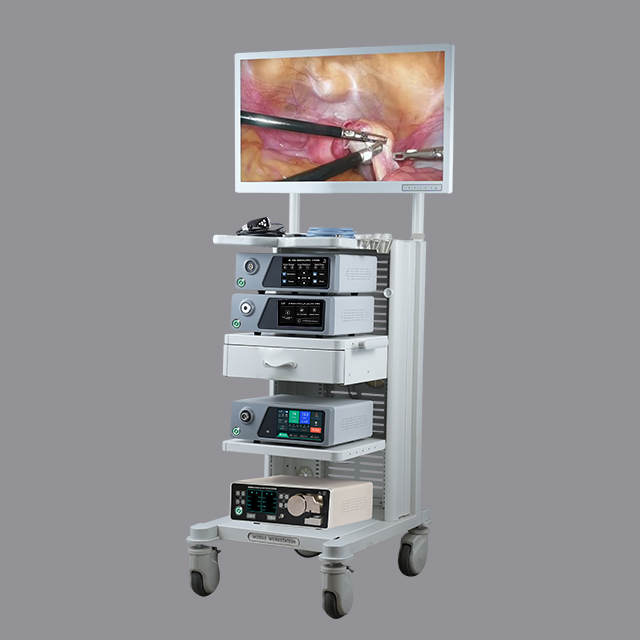
Even among 4K systems, several technical parameters influence usability and outcomes:
Frame rate and latency: Systems with higher frame rates (≥60 fps) provide smoother, real-time images, critical for fast or complex procedures
Field of view (FOV): Wide-angle scopes increase spatial awareness and ease navigation in confined cavities
Depth perception and color fidelity: High-contrast imaging and accurate color reproduction enable precise tissue differentiation
Connectivity: Support for LAN, USB, or wireless connections facilitates recording, telemedicine, and integration with hospital IT systems
Feature | System A | System B | System C | Notes |
Sensor Type | CMOS | CCD | Sensitivity and low-light performance | |
Resolution | 3840×2160 | 3840×2160 | 3840×2160 | True 4K vs interpolated 4K |
Illumination | LED | Xenon | LED+Xenon | Brightness, heat, lifespan |
Lens | Aspherical | Multi-element | Hybrid | Distortion control and zoom |
Connectivity | LAN/Wi-Fi | USB | Proprietary | Recording & integration options |
OR Integration | Full | Partial | Limited | Monitor and robotic compatibility |
Advantages:
Ultra-clear imaging for safer, faster surgeries
Reduced eye strain and fatigue during long operations
Compatibility with AI-assisted, robotic, and telemedicine platforms
High-quality recordings for education, training, and documentation
Limitations:
Higher initial investment compared to HD systems
Periodic maintenance and calibration required
Learning curve for staff unfamiliar with advanced features
Compatibility challenges with older OR equipment
Selecting a system requires careful evaluation of clinical requirements, budget, and support:
Key Considerations:
Sensor and optical quality for accurate imaging
Lighting type and control for optimal visualization
Ergonomic design for surgeon comfort and efficiency
Data recording, storage, and OR integration capabilities
Manufacturer reliability, warranty, and after-sales service
Recommended Manufacturer:
Xuzhou Hengjia Electronic Technology Co., Ltd. offers high-performance 4K endoscope systems that combine precision optics, advanced sensors, and intelligent processing. Their systems are engineered for durability, seamless integration, and consistent clinical performance, making them a trusted choice for hospitals and surgical centers worldwide.
The future of endoscopic imaging will leverage AI, robotics, and AR technology:
AI-assisted lesion detection for real-time guidance
Wireless 4K transmission reducing cable clutter and increasing OR flexibility
8K ultra-high-resolution imaging for unprecedented detail
AR overlays for surgical navigation
Robotic system integration for enhanced precision
These innovations continue to rely on high-quality 4K imaging as a foundation for improved surgical accuracy and patient safety.
Understanding the differences between modern 4K Endoscope Camera Systems is crucial for informed purchasing decisions. While resolution is critical, sensor type, optical design, illumination, processing, and OR integration all influence performance.
Selecting the right system ensures:
Enhanced surgical precision and efficiency
Reduced intraoperative errors and complications
Improved patient outcomes and recovery
For medical institutions seeking reliable, high-performance 4K endoscopic imaging, Xuzhou Hengjia Electronic Technology Co., Ltd. offers expert guidance and advanced systems designed for modern surgical excellence, durability, and seamless integration into operating environments.


