


Views: 0 Author: Site Editor Publish Time: 2025-11-18 Origin: Site


In recent years, advancements in medical technology have drastically improved the accuracy, efficiency, and comfort of diagnostic procedures, particularly in the field of gastrointestinal (GI) care. Among these innovations, the development of medical gastroscope endoscope systems has been particularly groundbreaking, offering significant improvements in how healthcare providers diagnose and treat gastrointestinal disorders. These systems combine sophisticated optics, high-definition imaging, and real-time visualization to provide doctors with a clearer, more detailed view of the upper GI tract, making them invaluable tools for detecting conditions such as ulcers, cancers, inflammation, and infections.
This article will explore the key innovations in medical gastroscope endoscope systems, focusing on their advancements in visual technology. We will discuss how these innovations are revolutionizing the field of gastrointestinal care, improving diagnostic accuracy, enhancing patient comfort, and shaping the future of GI procedures.
A gastroscope endoscope system is a medical device used by healthcare professionals to examine the upper gastrointestinal tract, including the esophagus, stomach, and duodenum. The system consists of a flexible tube, often referred to as an endoscope, equipped with a high-resolution camera, light source, and sometimes specialized instruments for performing biopsies or therapeutic interventions. The flexible nature of the device allows it to be inserted through the mouth or nose, offering a minimally invasive way to view the internal organs.
Gastroscope endoscope systems are primarily used in procedures like EGD (Esophagogastroduodenoscopy) and upper endoscopy, which enable doctors to diagnose conditions such as gastritis, gastroesophageal reflux disease (GERD), stomach ulcers, cancers, and infections. Over the years, the technology used in these systems has evolved, leading to innovations that have made the devices more effective, easier to use, and more comfortable for patients.
Several advancements in visual technology have contributed to the evolution of medical gastroscope endoscope systems. These innovations have improved the overall effectiveness of the procedure, enabling healthcare providers to make more accurate diagnoses and provide better care for their patients.
One of the most significant innovations in medical gastroscope endoscope systems is the introduction of high-definition (HD) and 4K resolution imaging. Older gastroscope systems used relatively low-resolution cameras that often made it difficult to detect smaller abnormalities or distinguish between similar-looking tissues. With the advent of HD and 4K imaging, the resolution of the images has dramatically improved, providing clearer, sharper visuals of the internal organs.
HD Imaging: With HD resolution, the endoscope can capture detailed images of the mucosal lining of the esophagus, stomach, and duodenum. This is especially important when examining areas for early signs of cancer, ulcers, or precancerous lesions. Clearer visuals reduce the risk of missing small, but potentially dangerous abnormalities.
4K Imaging: The introduction of 4K resolution in gastroscope endoscope systems has raised the standard even higher. 4K offers four times the resolution of HD, providing even more detail, which is particularly beneficial for biopsy procedures and for examining areas with subtle changes, like early-stage cancers or small ulcers.
The improved image quality allows doctors to make better-informed decisions during procedures, ultimately leading to more accurate diagnoses and improved patient outcomes.
Another innovative feature in modern gastroscope endoscope systems is Narrow Band Imaging (NBI), a technique that enhances the contrast between blood vessels and surrounding tissues. NBI uses specific light wavelengths to highlight vascular patterns and mucosal structures, allowing doctors to more clearly identify abnormalities that may not be visible with traditional white light.
How NBI Works: NBI uses narrow-band light to penetrate tissues at different depths, providing better contrast and clarity of the surface structures in the GI tract. The system highlights the blood vessels within the tissue, which can be crucial in detecting early signs of diseases like gastric cancer, Barrett’s esophagus, and precancerous lesions.
Benefits for Diagnosis: By offering a more detailed view of the vascular patterns, NBI helps healthcare providers distinguish between benign and malignant lesions, allowing for earlier intervention. NBI can also help identify early-stage inflammation or infection, which can be critical for preventing the progression of certain conditions.
This advanced visualization technique improves the accuracy of diagnoses, making it easier to detect abnormalities that may have previously gone unnoticed with conventional imaging techniques.
Recent advancements in digital image processing and the integration of artificial intelligence (AI) have further revolutionized the capabilities of gastroscope endoscope systems. Digital image processing enhances the clarity and brightness of images, compensating for poor lighting or difficult-to-view areas within the GI tract.
In addition, AI-powered software is increasingly being integrated into endoscope systems to assist in the detection of abnormalities. AI algorithms can be trained to recognize specific patterns in the images, such as polyps, ulcers, or tumors, and alert the physician to potential areas of concern.
AI-Assisted Diagnosis: AI can help identify subtle lesions that might be missed by the human eye, providing an additional layer of diagnostic support. For example, AI can automatically highlight areas that look suspicious, such as precancerous lesions or gastric polyps, increasing the chances of early detection and intervention.
Real-Time Image Enhancement: AI also improves real-time image processing by adjusting brightness, contrast, and sharpness to ensure the physician is seeing the best possible representation of the internal structures.
The combination of digital image processing and AI-assisted diagnostics makes modern gastoscope endoscope systems more powerful and precise, reducing the risk of misdiagnosis and improving overall outcomes.
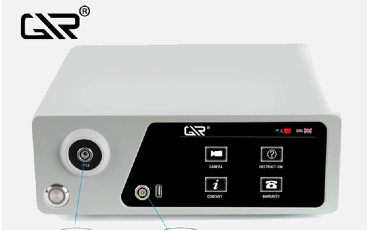
Over the years, the design of gastoscope endoscopes has become more refined, with a focus on minimally invasive procedures. Traditional gastroscopes were bulky and sometimes uncomfortable for patients. However, newer models feature small-diameter tubes that are more flexible and easier to insert into the body, causing less discomfort and reducing the risk of injury to the delicate tissues in the mouth, throat, and digestive tract.
Patient Comfort: Smaller, more flexible gastroscopes are less invasive and can be inserted with minimal discomfort, making the procedure more tolerable for patients. This is particularly important for individuals who may be anxious or have difficulty with traditional endoscopy.
Enhanced Maneuverability: The smaller diameter also improves maneuverability, allowing the physician to navigate difficult areas, such as tight corners in the upper GI tract, with greater ease. This reduces the time spent on the procedure and makes it less stressful for the patient.
These design improvements have made gastroscopy a more patient-friendly procedure while maintaining the high quality of diagnostic results.
In recent years, wireless endoscopy and capsule endoscopy have emerged as complementary technologies to traditional gastroscope systems. Capsule endoscopy involves swallowing a small, pill-sized camera that takes pictures of the GI tract as it moves through the digestive system. While this method is typically used for examining the small intestine, it is also being integrated with gastroscope systems for a more complete view of the entire GI tract.
Wireless Transmission: Wireless endoscopy systems eliminate the need for bulky cables, making the procedure more comfortable and less restrictive for both patients and healthcare providers. These systems use Bluetooth or Wi-Fi to transmit real-time images from the endoscope to a monitor or mobile device, allowing physicians to observe the internal structures more easily.
Combination of Technologies: By integrating capsule endoscopy with traditional gastroscopes, healthcare providers can perform a more thorough examination of the upper and lower GI tract, identifying issues that may not be visible with a traditional scope alone. This hybrid approach increases diagnostic accuracy, especially in cases where polyps or inflammatory bowel disease are suspected.
The integration of wireless and capsule technologies adds a new dimension to endoscopic diagnostics, allowing for more comprehensive examinations and a higher chance of detecting abnormalities early.
Innovations in medical gastroscope endoscope systems are revolutionizing gastrointestinal care with enhanced visual technology, improved diagnostic capabilities, and greater patient comfort. Technologies like high-definition imaging, Narrow Band Imaging (NBI), AI-assisted diagnostics, and minimally invasive designs are transforming the way ENT specialists, gastroenterologists, and surgeons perform diagnostic procedures, enabling more accurate diagnoses and early detection of conditions.
As these systems evolve, the potential for precise diagnosis and effective treatment grows exponentially. For healthcare providers aiming to enhance their diagnostic capabilities, investing in state-of-the-art gastroscope endoscope systems is essential. Xuzhou Hengjia Electronic Technology Co., Ltd. offers a range of advanced gastroscope systems, combining innovation, reliability, and cutting-edge technology to ensure improved patient outcomes and accurate diagnoses.


