Views: 0 Author: Site Editor Publish Time: 2025-11-27 Origin: Site


Flexible endoscopes have become an indispensable tool in modern medicine, revolutionizing the way diagnostic and therapeutic procedures are performed. These sophisticated devices allow physicians to access and visualize internal organs with minimal invasiveness, reducing patient recovery times and improving overall outcomes. Understanding the mechanics of flexible endoscopes is essential for medical professionals and biomedical engineers alike, as it sheds light on the technology that underpins many contemporary medical procedures.
Flexible endoscopes are medical instruments designed to examine the interior surfaces of organs and vessels within the body. They are characterized by their pliable nature, which allows navigation through the body's complex pathways. Unlike rigid endoscopes, flexible variants can bend and twist, providing access to areas that were once unreachable without invasive surgery.
Flexible endoscopes consist of several key components that work in unison to provide high-quality images and operational capabilities. Understanding these components is crucial for proper handling and maintenance.
The insertion tube is the flexible shaft that is inserted into the patient’s body. It is made up of multiple layers, including an outer waterproof covering, a mesh of metal or synthetic fibers for structural support, and internal channels for optics and instrument passage. The flexibility and durability of the insertion tube are critical for maneuverability and longevity.
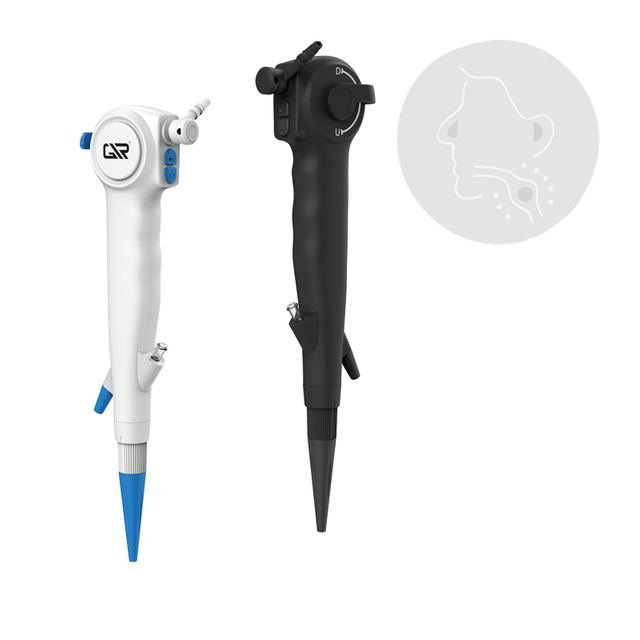
Attached to the proximal end of the insertion tube, the control handle allows the operator to steer the distal tip of the endoscope. Using dials and buttons, the physician can deflect the tip in various directions, control the flow of air and water, and operate accessory instruments.
The optical system comprises the lens, image sensor, and light transmission components. In traditional fiber optic endoscopes, images are transmitted via coherent fiber bundles. Modern video endoscopes employ a charge-coupled device (CCD) or complementary metal-oxide-semiconductor (CMOS) sensor at the distal tip to capture images electronically, providing higher resolution and better image quality.
Illumination is essential for visualizing internal structures. Light is transmitted from an external source through fiber optic bundles within the endoscope. Advances in LED technology have led to more efficient and brighter light sources, enhancing visualization during procedures.
Flexible endoscopes function through the coordinated operation of their mechanical and optical components. The operator manipulates the control handle to navigate the insertion tube through the body's passages. The distal tip’s deflection is achieved via tension wires connected to the control dials, allowing precise movement.
Steering the endoscope requires skill and understanding of the device's mechanics. The tension wires running through the insertion tube adjust the angle of the distal tip. By rotating and bending the tip, the physician can navigate around curves and obstacles within the anatomy.
As the endoscope advances, the image sensor captures live video, which is transmitted to an external monitor. High-definition sensors and advanced imaging software enhance the clarity and detail of the images, aiding in accurate diagnosis and treatment.
Recent years have seen significant technological innovations in flexible endoscopy. Incorporation of high-definition and 4K imaging provides unprecedented detail. The integration of fluorescence imaging and narrow-band imaging enhances tissue differentiation, improving diagnostic capabilities.
The development of single-use flexible endoscopes addresses concerns about cross-contamination and infection control. These disposable devices eliminate the need for reprocessing, reducing the risk of patient-to-patient transmission of pathogens.
Flexible endoscopes are used across various medical specialties. In gastroenterology, they are essential for procedures like colonoscopies and gastroscopies. Pulmonologists utilize bronchoscopes to examine the lungs, while urologists employ ureteroscopes for urinary tract examinations.
Beyond diagnostics, flexible endoscopes facilitate therapeutic procedures such as polyp removal, biopsy, and stent placement. Advanced models allow for energy delivery through lasers or electrocautery, expanding the scope of minimally invasive treatments.
Proper maintenance and sterilization of flexible endoscopes are critical for patient safety. The complex design with narrow channels and sensitive components requires meticulous cleaning protocols. Technicians must disassemble certain parts and use specialized equipment to ensure all contaminants are removed.
Reprocessing flexible endoscopes is time-consuming and requires trained personnel. Failure to adhere to guidelines can result in infection outbreaks. Innovations in endoscope design aim to simplify reprocessing or eliminate it through single-use devices.