


Views: 0 Author: Site Editor Publish Time: 2026-06-23 Origin: Site


Procuring a high-quality rigid laparoscope requires balancing clinical optical demands against the harsh realities of daily reprocessing. Modern surgical environments push delicate instruments to their absolute limits. While optical clarity heavily drives surgical precision, the true lifecycle value of a surgical laparoscope relies on distinct durability factors. It must withstand aggressive thermal shock repeatedly. The device must also comply rigorously to FDA and ISO standards. Furthermore, seamless integration into your existing video tower system remains vital.
This guide provides a robust clinical and operational framework. You can use it for evaluating medical endoscopes properly. We focus deeply on technical specifications, sterilization thresholds, and vendor support ecosystems. By understanding these core pillars, facility leaders can facilitate highly evidence-based procurement. Proper evaluation protects your budget and ensures maximum patient safety.
Optical vs. Mechanical Reality: A high-definition rigid laparoscope is only as effective as its rod-lens system's ability to survive repeated autoclave cycles without seal degradation.
Standardized Sizing Limits Risk: Standardizing on specific diameters (e.g., 5mm, 10mm) and viewing angles (0°, 30°) based on departmental case volume reduces redundant inventory and compatibility issues.
Reprocessing Dictates Lifespan: Strict adherence to vendor Instructions for Use (IFUs) regarding thermal shock prevention and compatible sterilization methods (steam vs. low-temperature) is the primary driver of equipment longevity.
Total Cost of Ownership (TCO): Initial purchase price is secondary to the cost of repair, replacement frequency, and warranty terms for structural failures.
Surgeons require absolute edge-to-edge clarity during complex procedures. They demand high light transmission. Zero peripheral distortion is necessary to safely navigate dense anatomy. A rigid laparoscope serves as the surgeon's only visual connection to the surgical field. Blood, smoke, and anatomical barriers already obscure visibility naturally. Therefore, the baseline optical performance must be absolutely flawless.
Central Sterile Services Departments (CSSD) face entirely different operational challenges. CSSD staff require highly resilient instruments constantly. These devices must withstand aggressive biological soil removal. They undergo high-temperature steam sterilization frequently. These extreme processes cannot compromise delicate optical seals. If moisture breaches a single seal, the instrument fails immediately. The rod-lens system fogs up, halting the surgery entirely.
Procurement teams must navigate conflicting manufacturer claims carefully. You will often see marketing labels claiming "4K-readiness" or declaring a scope "indestructible." No medical device is truly immune to physical wear. You must acknowledge this reality upfront. Your true goal is predictable degradation over time. You want dependable repairability from your chosen vendor. Balancing clinical perfection against mechanical durability remains your primary challenge.
You typically select 10mm scopes for standard diagnostic and therapeutic procedures. They provide optimal light transmission directly to the camera. They also offer a vastly superior field of view. Conversely, you select 5mm scopes for pediatric cases. They also excel in highly localized or minimally invasive multi-port surgeries. A 5mm surgical laparoscope reduces incision size significantly. However, it compromises slightly on overall light intake and image brightness.
Direction of View (DOV) dictates surgical ergonomics. A 0° scope provides straightforward visualization. It feels highly intuitive for basic spatial orientation. The 30° and 45° scopes serve different purposes entirely. They allow surgeons to navigate around solid organs safely. You can look into complex anatomical corners easily. Rotating an angled scope dramatically expands the visual field.
You must evaluate the internal rod-lens system closely. Premium scopes utilize highly refined optical glass. Higher glass quality yields significantly better light transmission. It also guarantees less peripheral distortion at the image edges. Manufacturers arrange these glass rods meticulously inside the shaft. The spacing and curvature dictate overall visual fidelity.
You must verify optical resolution claims rigorously. The scope must match your facility's existing camera heads and monitors. A modern 4K monitor absolutely cannot compensate for a low-resolution scope. If you pair older scopes to modern 4K systems, pixelation occurs. You only get true 4K imagery if every component supports it.
You need compatibility across your existing light cables. Most scopes feature standard fiber optic post connections. Adapters exist, but native connections always perform much better. We must also evaluate heat generation carefully. Light cables transmit intense thermal energy. Heat builds up rapidly at the distal tip and light post. This happens frequently during extended, complex procedures. High heat can damage patient tissue or degrade structural adhesives.
Specification Parameter | 10mm Standard Scope | 5mm Slim Scope |
|---|---|---|
Optimal Use Case | General surgery, bariatrics, gynecology | Pediatrics, localized micro-surgery |
Light Transmission | Maximum (Ideal for deep cavities) | Moderate (Requires stronger light source) |
Field of View (FOV) | Wide panoramic visibility | Narrower, highly targeted visibility |
Incision Trauma | Standard trocar requirement | Minimal trocar requirement |
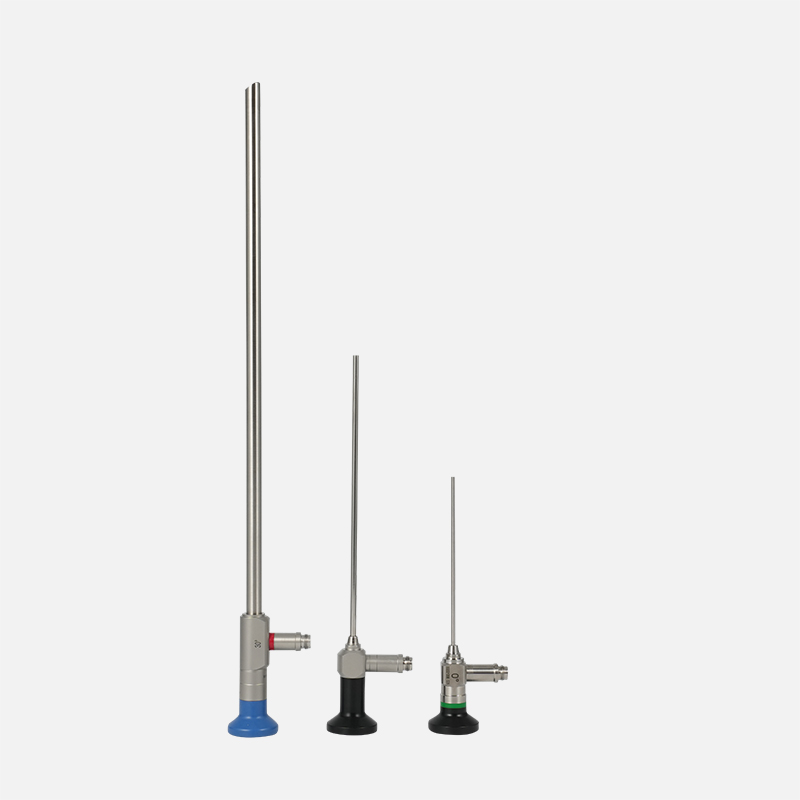
Evaluate manufacturer claims regarding autoclave cycle limits critically. Some vendors guarantee performance for a specific number of cycles. Implementation risk remains incredibly high during routine reprocessing. The primary cause of scope failure is thermal shock. Rapid heating and cooling destroy internal glass components. Differential expansion occurs between the metal sheath and delicate lenses. You must highlight the need for standardized CSSD cooling protocols. Rushing the cooling process shatters lenses instantly.
Some facilities utilize low-temperature chemical sterilization routinely. Systems like STERRAD or V-PRO use hydrogen peroxide vapor. ETO gas offers another alternative for highly sensitive devices. Older models specifically benefit from these gentler thermal cycles. However, chemical degradation poses severe long-term risks. Harsh vapors attack distal window adhesives relentlessly. They also degrade laser-welded joints over time. You must consult specific IFUs before changing sterilization modalities.
You require dedicated sterilization trays immediately. Secure scope containers prevent mechanical impact trauma during transport. Mechanical drops represent the second leading cause of rod-lens fractures. A simple bump against a sink edge ruins the optics. You must establish strict physical handling protocols.
Implementing a rigid handling protocol requires several actionable steps:
Immediate Segregation: Separate the scope from heavy metallic instruments immediately post-surgery.
Dedicated Transport: Place the device into a custom-molded polymer transport tray.
Regulated Cooling: Allow the instrument to cool at room temperature before applying any liquid enzymes.
Manual Inspection: Verify the integrity of the sapphire tip using magnification prior to the autoclave cycle.
Secure Storage: Lock the sterilized scope in a dedicated cabinet away from high-traffic zones.
You must verify FDA clearance or regional equivalents like the CE mark. Adherence to ISO 8600 standards ensures medical endoscope quality. These standards govern baseline optical performance and structural safety. Biocompatibility of outer sheath materials is also paramount. Most manufacturers use premium medical-grade stainless steel. This prevents adverse patient tissue reactions during prolonged contact. Smooth, seamless construction eliminates harbor points for dangerous pathogens.
Initial purchase price matters significantly less than the overall cost-per-use. You must factor in the expected lifespan of the instrument. Review historical facility data to establish realistic lifecycle expectations. Assess the vendor's overall repair ecosystem thoroughly. Do they offer predictable flat-rate repairs? Loaner programs during downtime prevent costly surgical cancellations. Explicit warranties against sterilization-induced fogging indicate strong manufacturing confidence.
Before issuing any purchase orders, teams must validate choices methodically. Blindly purchasing optical equipment leads to severe integration failures. You should implement a structured shortlisting logic.
Audit Existing Infrastructure: Map your current camera systems and light sources accurately. Document your specific sterilization equipment brands and models. This ensures vital cross-compatibility before you evaluate any new scopes.
Clinical Trials: Arrange for blind or controlled trials in the OR. Surgeons must evaluate optical clarity in a live setting. Instruct them to specifically test for fogging and light distribution. They should assess color reproduction and edge distortion carefully.
CSSD Validation: Provide shortlisted scopes directly to the sterilization department. They must confirm the IFU processes align with current workflows. Equipment capabilities must match the manufacturer's strict requirements. Never purchase scopes without formal CSSD approval.
Selecting the right rigid laparoscope requires moving past isolated optical specifications. You must evaluate the instrument as part of a continuous operational lifecycle. These devices face rigorous surgical use, aggressive reprocessing, and strict regulatory compliance daily. Focusing solely on image resolution ignores the structural reality of the operating room.
To optimize your procurement strategy, take decisive action. First, prioritize vendors who provide highly transparent sterilization cycle data. Second, demand robust repair guarantees to protect your clinical investment long-term. Finally, ensure all optical parameters truly match your existing OR technology stack. By aligning clinical needs with CSSD realities, you guarantee peak performance and reliable patient safety.
A: Lifespan is highly dependent on handling and reprocessing volume. With strict IFU adherence and no mechanical drops, high-quality scopes typically last between 1 to 3 years before requiring optical overhaul or resealing.
A: Perform a visual inspection: check the distal and proximal windows for scratches, look through the scope at a printed text target to check for blurriness or internal moisture (fogging), and test light transmission by holding the light post to a light source and checking the distal tip.
A: Mechanically, yes, if the coupler fits. Visually, no. A standard-definition scope used with a 4K camera will project a pixelated, sub-optimal image. Scopes must be specifically engineered with high-grade optical glass to support 4K resolution.
A: A 0-degree scope provides a straight-ahead view, ideal for basic orientation. A 30-degree scope provides an angled view, allowing the surgeon to rotate the light post to see "around" anatomical structures, which is critical for complex pelvic or hepatobiliary surgeries.


