


Views: 0 Author: Site Editor Publish Time: 2025-11-03 Origin: Site


Have you ever wondered how doctors examine your throat and voice box? Laryngoscopy, including nasolaryngoscopy with a flexible rhinolaryngoscope, is crucial for diagnosing throat conditions. These procedures help identify issues affecting speech, breathing, and swallowing. In this post, you'll learn about different laryngoscopy types and their importance in diagnosing throat and voice box conditions.
This is the simplest type of laryngoscopy. It uses a small mirror placed at the back of the throat. A light is shined on the mirror to view the throat and voice box. Usually, it’s done in the doctor’s office while the patient is awake. Sometimes, a numbing medicine is sprayed in the throat to reduce gagging. Because it can cause gagging, it’s not often used in young children or people who gag easily. Indirect laryngoscopy is helpful for quick examinations and initial assessments.
This common method uses a tiny, flexible tube called a fiberoptic scope. The scope has a camera and light attached. It’s gently passed through the nose into the throat. The patient remains awake during the procedure. Numbing spray is often used in the nose to make it more comfortable. It takes less than a minute. This technique provides detailed images of the voice box, vocal cords, and upper airway. It’s especially useful for evaluating voice issues, swallowing problems, or airway obstructions. Because it’s flexible, it can navigate around curves in the nose and throat easily. It’s safe for most patients, including children, but may cause some pressure or sneezing sensations.
This more invasive procedure involves inserting a tube called a laryngoscope into the mouth and down the throat. The tube can be flexible or stiff. It allows doctors to see deeper into the throat and voice box. Usually, it’s performed in a hospital under general anesthesia, meaning the patient is asleep and pain-free. Doctors may use it to take tissue samples (biopsies), remove foreign objects, or examine suspicious areas more thoroughly. Because it requires anesthesia and a controlled setting, it’s reserved for complex cases or when other tests aren’t enough.
This specialized type uses a strobe light to examine the vocal cords while they vibrate. It helps doctors see if the cords move properly and identify subtle abnormalities. This technique is often combined with fiberoptic laryngoscopy. It provides more detailed information about voice disorders, especially for patients with hoarseness or vocal fatigue. The strobe light creates an illusion of slow-motion motion of the vocal cords, making it easier to detect issues with their movement.
Preparation varies depending on the type of laryngoscopy. For procedures under general anesthesia, patients may be asked to fast—no food or drink—for several hours beforehand. This reduces the risk of aspiration during the procedure. If sedation or anesthesia is planned, the healthcare team will give specific instructions regarding medications and fasting.
For less invasive types, like fiberoptic or flexible laryngoscopy, preparation is usually minimal. Patients may be advised to avoid eating or drinking immediately before the test, especially if a numbing spray will be used. Sometimes, a topical anesthetic or vasoconstrictor is applied inside the nose or throat to make the procedure more comfortable and reduce bleeding risk. The healthcare provider will check that all equipment is functioning properly before beginning.
Indirect Laryngoscopy:
Usually performed in the doctor’s office.
A small mirror is held at the back of the throat.
A light is shined on the mirror to visualize the vocal cords and throat.
Often, a numbing spray is used to reduce gagging.
The procedure is quick, often just a few minutes.
Fiberoptic (Nasolaryngoscopy):
The most common method.
A flexible, thin tube with a camera and light is passed through the nose into the throat.
The patient remains awake.
Numbing spray is applied inside the nose to improve comfort.
The scope gently advances past the nasal passages into the throat.
The doctor inspects the vocal cords, larynx, and upper airway.
The entire process takes less than a minute.
Direct Laryngoscopy:
More invasive, performed in a hospital setting.
A tube called a laryngoscope is inserted into the mouth and down the throat.
Usually done under general anesthesia; the patient is asleep.
Allows deep inspection of the throat, vocal cords, and surrounding tissues.
Biopsies, foreign object removal, or tissue sampling may be done.
Procedure duration varies but can take around 15-30 minutes.
Laryngoscopy Using Strobe Light:
Often combined with fiberoptic scope.
Uses a strobe light to examine vocal cord vibration.
Helps detect subtle movement issues.
Especially useful for voice disorders like hoarseness.
The strobe creates a slow-motion illusion, revealing abnormalities in cord movement.
After the test, patients are monitored briefly. For procedures involving anesthesia, they stay until the effects wear off. Patients should avoid eating or drinking until numbness subsides, reducing choking risk.
For fiberoptic and indirect laryngoscopy:
Throat might feel sore or scratchy.
Gagging or mild discomfort can occur temporarily.
Drinking warm fluids or using throat lozenges can soothe irritation.
For direct laryngoscopy:
A sore throat may last a few days.
Swelling or minor bleeding can happen, especially if biopsies were taken.
Rest and avoiding strenuous activity are recommended.
Patients should follow their healthcare provider’s instructions on medications, activity restrictions, and signs of complications, such as bleeding, severe pain, or difficulty breathing. If symptoms worsen or unusual problems arise, prompt medical attention is necessary.
Laryngoscopy helps doctors diagnose many problems involving the throat and voice box. It provides a clear view of the larynx, vocal cords, and surrounding tissues. This makes it a valuable tool for identifying conditions that affect speech, breathing, and swallowing.
Doctors often recommend laryngoscopy when patients have persistent symptoms such as:
Hoarseness or voice changes lasting more than three weeks
Chronic sore throat or throat pain that doesn’t improve
Feeling of something stuck in the throat
Unexplained ear pain
Suspicion of growths, nodules, or tumors in the throat or voice box
Signs of infection or inflammation affecting the vocal cords
By examining the vocal cords directly, laryngoscopy can detect nodules, polyps, tumors, or inflammation. It also helps identify damage caused by acid reflux (GERD), which can irritate the voice box.
Breathing difficulties like noisy breathing (stridor) or airway obstruction may stem from issues in the larynx or upper airway. Laryngoscopy allows doctors to see if swelling, growths, or vocal cord paralysis are blocking airflow. This is especially important for patients experiencing shortness of breath or wheezing that doesn’t respond to usual treatments.
A chronic cough without a clear cause can be frustrating. Laryngoscopy helps uncover hidden problems such as vocal cord dysfunction, irritation, or early signs of cancer. It also evaluates voice problems like weak or raspy voice, vocal fatigue, or sudden loss of voice. This is crucial for singers, teachers, or others who rely heavily on their voice.
Checking for foreign objects stuck in the throat
Taking tissue samples (biopsies) when cancer or other serious conditions are suspected
Monitoring healing after surgery or treatment for throat conditions
Laryngoscopy is often combined with other tests to provide a full picture of throat health. It’s a quick, safe, and effective way to guide diagnosis and treatment plans.
A normal laryngoscopy means the throat, voice box, and vocal cords look healthy. The vocal cords should appear smooth, pale pink, and move symmetrically when the patient speaks or breathes. There should be no swelling, redness, lumps, or irregularities. The surrounding tissues in the larynx and pharynx also appear normal without signs of inflammation or damage. Normal vocal cord movement is crucial for proper voice production and breathing.
Abnormal findings during laryngoscopy can indicate various conditions. Some common causes include:
Acid Reflux (GERD): This causes redness and swelling of the vocal cords due to stomach acid irritating the tissue.
Nodules or Polyps: These benign growths on the vocal cords can cause hoarseness or voice changes.
Cancer: Tumors or suspicious masses may appear as irregular, firm lumps or ulcerations. Early detection is key for treatment.
Inflammation or Infection: The throat tissues may look red, swollen, or have pus, indicating infections like laryngitis.
Vocal Cord Paralysis: One or both vocal cords may not move properly due to nerve damage, affecting voice and breathing.
Presbylaryngis: This age-related thinning of vocal cord muscles leads to a weak or breathy voice.
Foreign Bodies or Trauma: Objects stuck in the throat or injury signs may be visible.
When abnormal results appear, doctors take several steps to manage the condition:
Further Testing: Additional imaging, biopsies, or lab tests may be ordered to confirm the diagnosis.
Referral: Patients might be referred to specialists such as otolaryngologists or oncologists for expert care.
Treatment Planning: Depending on the cause, treatment may include medication (e.g., anti-reflux drugs), voice therapy, surgery, or cancer therapies.
Monitoring: Some conditions require regular follow-up laryngoscopies to track progress or response to treatment.
Patient Education: Patients receive guidance on voice rest, lifestyle changes, or avoiding irritants like smoking.
Early identification and appropriate follow-up are vital to prevent complications and improve outcomes. Abnormal findings do not always mean serious disease, but they do require attention.
Laryngoscopy procedures, while generally safe, carry certain risks that both patients and providers should understand. These risks vary depending on the type of laryngoscopy performed and the patient's individual health status.
Allergic reactions: Some patients may react to anesthesia or topical agents used during the procedure. Reactions can include breathing difficulties, heart problems, or skin rashes.
Infection: Though rare, introducing instruments into the throat or nose can introduce bacteria, leading to infections.
Major bleeding: Especially in procedures involving biopsies or removal of tissue, bleeding can occur. While usually minor, it may require medical intervention.
Nosebleed: Nasal passages are delicate; inserting scopes can cause bleeding, particularly in patients with fragile vessels or nasal conditions.
Vocal cord spasm: Manipulation of the vocal cords may cause involuntary spasms, temporarily affecting breathing or voice.
Ulcers or mucosal injury: The scope or instruments might cause small injuries or ulcers in the lining of the mouth, throat, or nose.
Injury to surrounding structures: Rarely, neighboring tissues like the tongue, lips, or teeth may sustain injury during the procedure.
Some patients should not undergo specific types of laryngoscopy due to their health conditions:
Suspected epiglottitis: Emergency airway management is critical; procedures like flexible laryngoscopy can worsen swelling or cause airway obstruction.
Active epistaxis or uncontrolled bleeding: Inserting scopes through the nose can exacerbate bleeding or damage fragile vessels.
Severe allergic reactions or sensitivities: Patients with known allergies to anesthetics or topical agents should inform their healthcare provider beforehand.
Severe airway compromise: Conditions like angioedema, significant airway swelling, or severe stridor may require alternative evaluation methods or emergency intervention.
Certain populations require special attention:
Children: Smaller airways and increased gag reflex make procedures more challenging. Careful selection of technique and sedation is necessary.
Elderly: Age-related tissue fragility increases risk of injury or bleeding. They may also have comorbidities affecting anesthesia safety.
Patients with bleeding disorders: These individuals are at higher risk for excessive bleeding. Pre-procedure assessment and possible correction of clotting issues are essential.
Patients with compromised immunity: Increased infection risk requires strict sterile technique and possibly prophylactic measures.
Patients with previous neck or throat surgery: Scar tissue or altered anatomy may complicate the procedure, requiring experienced specialists.
Tip: Always review the patient's medical history thoroughly and discuss potential risks with them beforehand to ensure informed consent and optimal safety during laryngoscopy.
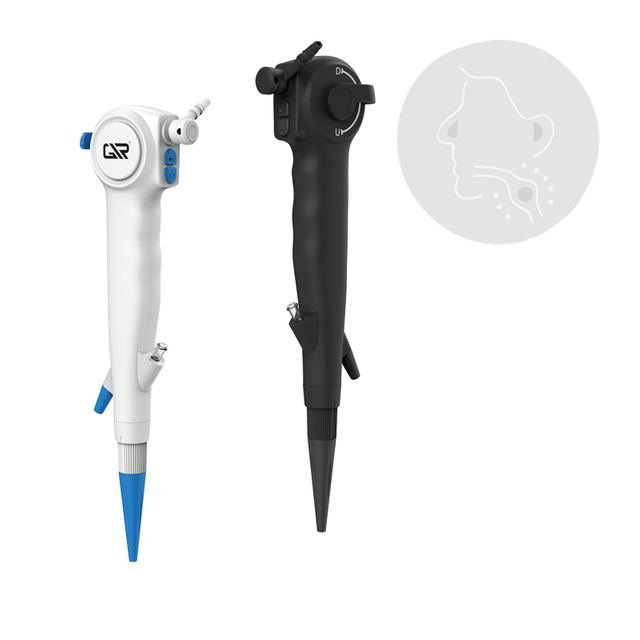
The flexible rhinolaryngoscope is a vital instrument in modern laryngoscopy and nasolaryngoscopy. It’s a thin, bendable tube fitted with a tiny camera and light. This scope is inserted through the nose, allowing doctors to see the nasal passages, throat, and voice box clearly. Its flexibility helps navigate the natural curves inside the nose and throat, providing detailed, real-time images.
Comfort for Patients: Since it’s flexible and thin, the scope causes less discomfort than rigid instruments. Most patients tolerate it well, including children and those sensitive to gagging.
Awake Procedure: It can be used while the patient is awake, avoiding risks related to general anesthesia.
Detailed Visualization: The camera captures high-resolution images of the vocal cords, larynx, and surrounding structures. This helps detect subtle abnormalities such as nodules, polyps, or inflammation.
Quick and Efficient: The procedure usually takes less than a minute, making it convenient for both doctors and patients.
Versatility: It allows dynamic assessment of vocal cord movement during speech or breathing, which is crucial for diagnosing voice disorders.
Minimal Risks: It has a low complication rate, with rare occurrences of nosebleeds or mild discomfort.
Rigid Laryngoscopes: These provide excellent image quality but require the patient’s mouth to be open wide. They are less comfortable and typically need sedation or anesthesia.
Indirect Mirror Laryngoscopy: This is simpler but less detailed and can trigger gagging. It’s limited to a basic view of the vocal cords.
Direct Laryngoscopy: More invasive and done under anesthesia. It allows tissue biopsy or removal of foreign objects but is not suitable for routine exams.
The flexible rhinolaryngoscope strikes a balance between comfort, safety, and diagnostic power. It’s the preferred choice for most office-based laryngoscopy exams.
Doctors commonly recommend this procedure for:
Evaluating Voice Problems: Persistent hoarseness, voice changes, or vocal fatigue.
Assessing Breathing Issues: Noisy breathing, stridor, or suspected airway obstruction.
Investigating Throat Symptoms: Chronic cough, sensation of a lump, or unexplained throat pain.
Monitoring Known Conditions: Follow-up for vocal cord lesions or after surgery.
Screening High-Risk Patients: Smokers or those with prolonged throat symptoms to detect early cancer signs.
Swallowing Assessments: Combined with swallowing tests to evaluate swallowing difficulties.
Because it’s safe and effective, flexible rhinolaryngoscopy is a key diagnostic tool in otolaryngology clinics. For B2B providers, offering flexible rhinolaryngoscopy with high-definition imaging and video recording capabilities can enhance diagnostic accuracy and patient engagement.
The article discusses various types of laryngoscopy, including indirect, fiberoptic, and direct methods, highlighting their uses and benefits. Laryngoscopy helps diagnose throat and voice box issues, offering detailed views of the larynx and vocal cords. Future advancements in laryngoscopy focus on enhancing diagnostic accuracy and patient comfort. Hengjia offers high-quality fiberoptic scopes with advanced imaging capabilities, providing significant value in improving diagnostic outcomes and patient care.
A: A Flexible Rhinolaryngoscope is used to examine the nasal passages, throat, and voice box, providing detailed images for diagnosing voice and throat conditions.
A: The Flexible Rhinolaryngoscope is thin and bendable, causing less discomfort than rigid scopes, making it well-tolerated by most patients, including children.
A: Flexible Rhinolaryngoscopes offer comfort, real-time imaging, and can be used while the patient is awake, unlike rigid scopes which often require sedation.
A: It helps diagnose voice disorders, breathing issues, throat pain, and monitors conditions like vocal cord lesions or screens for early cancer signs.


